- The difference between traditional SEO and Generative Engine Optimisation (GEO)
- Why 93 percent of Google AI Mode queries end without a click and what that means for your business
- Which platforms matter most for B2B and B2C businesses in India
- How to structure content so AI tools quote your brand in their answers
What is AI search and Generative Engine Optimisation (GEO)
AI search is not a future concept. It is here right now. When a potential customer asks ChatGPT which digital marketing agency in Chennai is the best, or asks Gemini which retailer in Bangalore has the fastest delivery, the answer is generated by an AI model. Your business is either included in that answer or it is not. There is no search results page with ten blue links. There is just one answer.
Generative Engine Optimisation (GEO) is the practice of structuring your business content so that AI search platforms like ChatGPT, Google Gemini, Microsoft Copilot, and Perplexity cite your brand inside the answers they generate. This is different from traditional SEO where you optimise for ranking in a list of links. With GEO, you optimise to be quoted inside a conversation.
Think of it this way. Traditional SEO helps you appear on page one of Google. GEO helps you appear inside the answer that an AI tool delivers to a user. Both are important. But GEO is the new layer that most Indian businesses have not started working on yet. And the first-mover window is estimated to remain open for roughly six to twelve more months in many Indian categories, according to recent industry reports.
Why ranking in AI search results matters in 2026 for Indian businesses
AI tools are replacing traditional search for many queries
ChatGPT now has over 900 million weekly active users globally. Google AI Overviews are used by more than 1.5 billion people every month. People are asking AI tools for recommendations, comparisons, and answers instead of browsing through search results. If your business does not exist in these AI answers, you are invisible to a huge audience.
Organic click-through rates are dropping sharply
A study of 25.1 million impressions over 16 months found that organic click-through rates dropped 61 percent on queries that triggered AI Overviews. Additionally, 93 percent of Google AI Mode queries end without any click at all. Customers are making decisions inside the AI answer itself. They never visit a website. That is why being cited inside that answer is so valuable.
AI-referred visitors convert better
According to Semrush 2026 data, visitors who come to your site from AI platforms convert at 4.4 times the rate of traditional search visitors. These are high-intent users who have already been convinced by the AI answer and are coming to your site to take action.
Most Indian SMEs are completely missing out
A study by ANI News found that 9 in 10 Indian SMEs cannot be found by ChatGPT or Gemini. This is a massive gap. The businesses that start GEO now will have a significant advantage over competitors who wait. The window of opportunity is closing, but it is still open for those who act.
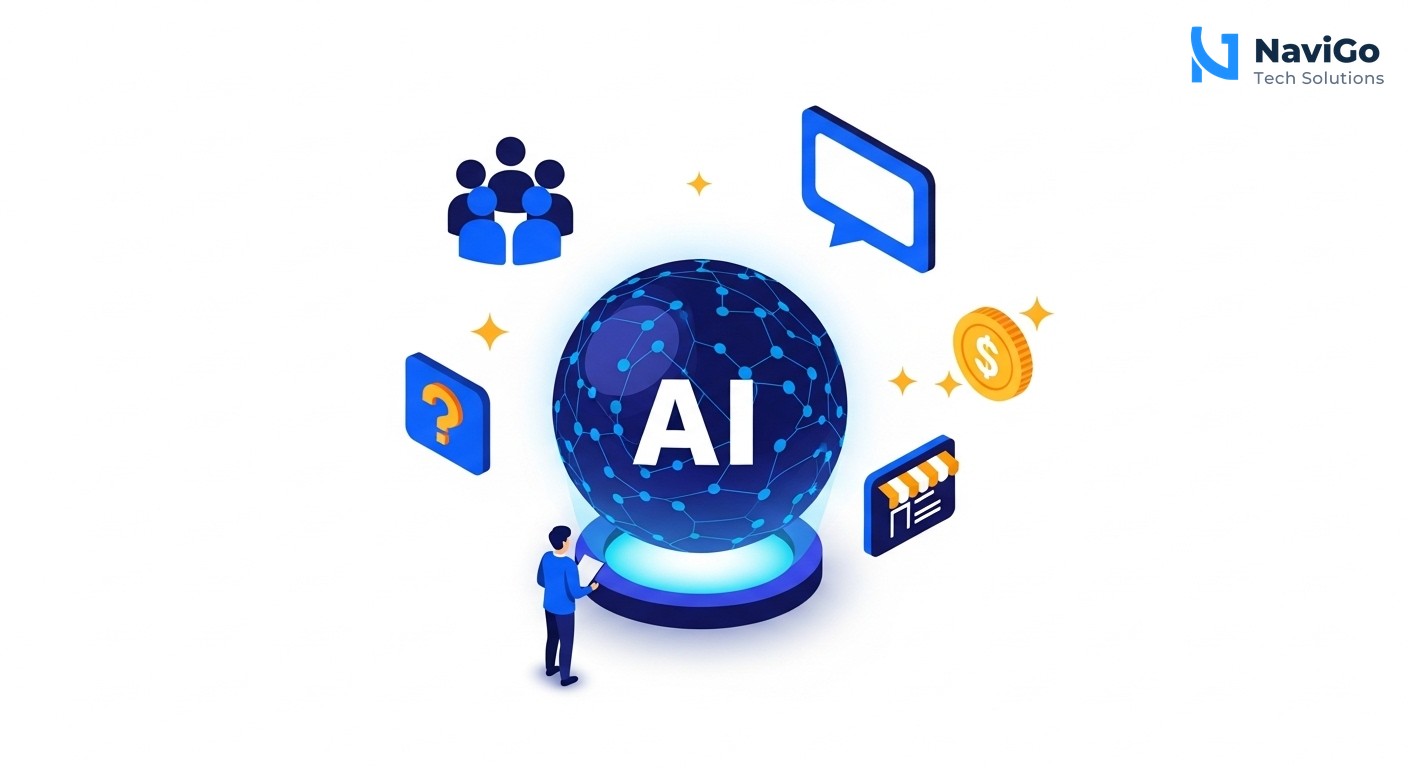
Step-by-step guide to rank in AI search results for your Indian business
- Step 1: Audit your current AI visibility. Start by asking AI tools simple questions related to your business. Ask ChatGPT, Gemini, and Microsoft Copilot “Which is the best [your service] in [your city]?” See if your business is mentioned. If not, you have work to do. Also check if your competitors appear. This gives you a baseline.
- Step 2: Create content that answers real customer questions. AI tools prefer content written in natural, conversational language. Publish detailed blog posts and FAQ pages that answer the exact questions your customers ask. Use question-based headings. For example, instead of “Digital Marketing Services,” write “What digital marketing services can help my Chennai business grow?” This matches how users query AI tools.
- Step 3: Build topical authority with content clusters. Do not write one article and stop. Create a cluster of related articles around a core topic. For example, if you are a restaurant, write about your menu, your sourcing, your hygiene practices, your delivery process, and customer experiences. AI tools see this depth as authority. For more help, read our Local SEO guide for Chennai businesses which explains how to build local authority.
- Step 4: Use structured data and schema markup. Add FAQ schema, HowTo schema, and Organisation schema to your website. This helps AI tools understand and trust your content. It also improves your chances of being cited in AI answers. Technical SEO foundations like fast page loading, mobile-first design, and secure HTTPS are non-negotiable.
- Step 5: Get cited on third-party platforms. Research shows that brands are 6.5 times more likely to be cited via third-party sources than through their own domains. Get featured on industry blogs, news portals, review platforms like Trustpilot and G2, and community forums like Reddit and Quora. Wikipedia is the most cited source by ChatGPT, accounting for 47.9 percent of all citations. Distributing earned media can increase AI citations by up to 325 percent.
- Step 6: Showcase original data and named frameworks. AI tools love statistics, original research, and named frameworks. Publish your own data, case studies, and surveys. Give your frameworks a clear name. For instance, “The Chennai 5-Step SEO Blueprint” is more likely to be cited than generic advice. For more on this, see our article on why writing longer content helps your SEO.
Step-by-step guide to rank in AI search results
Follow these six steps to get your Indian business cited by AI search platforms. Each step builds on the previous one, so do not skip ahead.
- Step 1: Audit your current AI visibility. Start by asking AI tools simple questions related to your business. Ask ChatGPT, Gemini, and Microsoft Copilot “Which is the best [your service] in [your city]?” See if your business is mentioned. If not, you have work to do. Also check if your competitors appear. This gives you a baseline.
- Step 2: Create content that answers real customer questions. AI tools prefer content written in natural, conversational language. Publish detailed blog posts and FAQ pages that answer the exact questions your customers ask. Use question-based headings. For example, instead of “Digital Marketing Services,” write “What digital marketing services can help my Chennai business grow?” This matches how users query AI tools.
- Step 3: Build topical authority with content clusters. Do not write one article and stop. Create a cluster of related articles around a core topic. For example, if you are a restaurant, write about your menu, your sourcing, your hygiene practices, your delivery process, and customer experiences. AI tools see this depth as authority. For more help, read our Local SEO guide for Chennai businesses which explains how to build local authority.
- Step 4: Use structured data and schema markup. Add FAQ schema, HowTo schema, and Organisation schema to your website. This helps AI tools understand and trust your content. It also improves your chances of being cited in AI answers. Technical SEO foundations like fast page loading, mobile-first design, and secure HTTPS are non-negotiable.
- Step 5: Get cited on third-party platforms. Research shows that brands are 6.5 times more likely to be cited via third-party sources than through their own domains. Get featured on industry blogs, news portals, review platforms like Trustpilot and G2, and community forums like Reddit and Quora. Wikipedia is the most cited source by ChatGPT, accounting for 47.9 percent of all citations. Distributing earned media can increase AI citations by up to 325 percent.
- Step 6: Showcase original data and named frameworks. AI tools love statistics, original research, and named frameworks. Publish your own data, case studies, and surveys. Give your frameworks a clear name. For instance, “The Chennai 5-Step SEO Blueprint” is more likely to be cited than generic advice. For more on this, see our article on why writing longer content helps your SEO.
Common mistakes Indian businesses make with GEO
Mistake 1: Treating GEO like traditional SEO
Many businesses continue to stuff keywords into content and expect AI tools to cite them. That does not work. AI platforms evaluate depth, usefulness, and authority. They also prefer clear, simple language over keyword-dense paragraphs. Focus on answering questions thoroughly rather than hitting a keyword count.
Mistake 2: Ignoring third-party citations
As mentioned earlier, brands are 6.5 times more likely to be cited from third-party sources than their own websites. Yet many Indian businesses focus only on their blogs. You must invest in getting mentioned on other sites, review platforms, and industry publications. If you need help with this, our AI digital marketing services include earned media distribution to boost your citations.
Mistake 3: Not measuring AI visibility
You cannot improve what you do not measure. Most businesses do not track how often they are cited by ChatGPT, Gemini, or Copilot. Start tracking branded search volume, direct traffic patterns, and citation frequency. Tools and manual checks every month will show you what is working.
Mistake 4: Writing for keywords instead of people
AI tools are trained on human language. They prefer content that sounds natural and helpful. Write as if explaining something to a friend who runs a business. Use simple English. Avoid jargon. Include clear explanations. This approach is more likely to be picked up by AI search platforms.
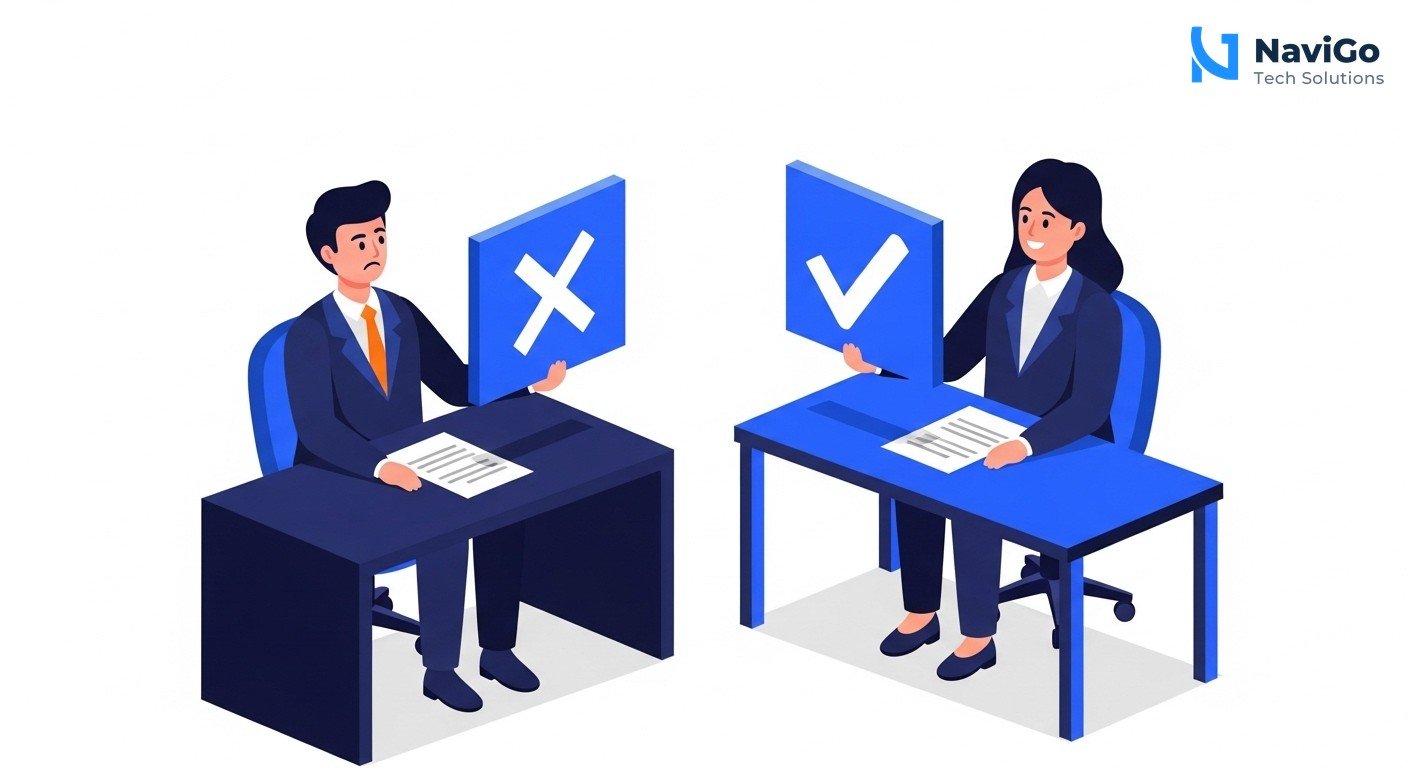
Platform comparison and measurement strategy
Not all AI platforms are equally important for every business. Your priority depends on whether you serve consumers or other businesses. The table below shows which platforms to focus on in 2026 for Indian businesses.
| Platform | Best for | Key Strength | Priority for 2026 |
|---|---|---|---|
| ChatGPT | B2B and Consumer | Largest user base, 900M weekly users | Highest |
| Google Gemini / AI Mode | Consumer | Deep integration with Google services | High for Consumer |
| Microsoft Copilot | B2B | Embedded in Microsoft 365 ecosystem | Critical for B2B |
| Perplexity | Research-intensive users | Citation-first, transparent sourcing | Medium |
| Claude | Senior decision-makers | Trust in regulated industries | Medium |
To measure your success, track three key metrics. First, citation frequency: how often does your business name or website appear in AI answers? Second, branded search volume: are more people searching for your brand after seeing AI answers? Third, conversion rate quality: are AI-referred visitors converting at a higher rate? You can start by manually checking once a week. As your GEO efforts grow, consider using tools that monitor citations across platforms. For a complete AI-friendly strategy, explore our SEO optimisation services designed for Indian businesses.
Not sure which tool fits your business?
Our team at NaviGo Tech Solutions will set it up for you — free 30-minute strategy call.