- The three new Gemini-powered shopping features launched in India in April 2026
- How the Universal Commerce Protocol works and why it replaces the old Shopping Graph
- How to optimise your product feeds for AI-driven search
- What Indian businesses are already doing right and where most are failing
- A clear action plan you can implement this week
What Are Google’s AI Shopping Updates
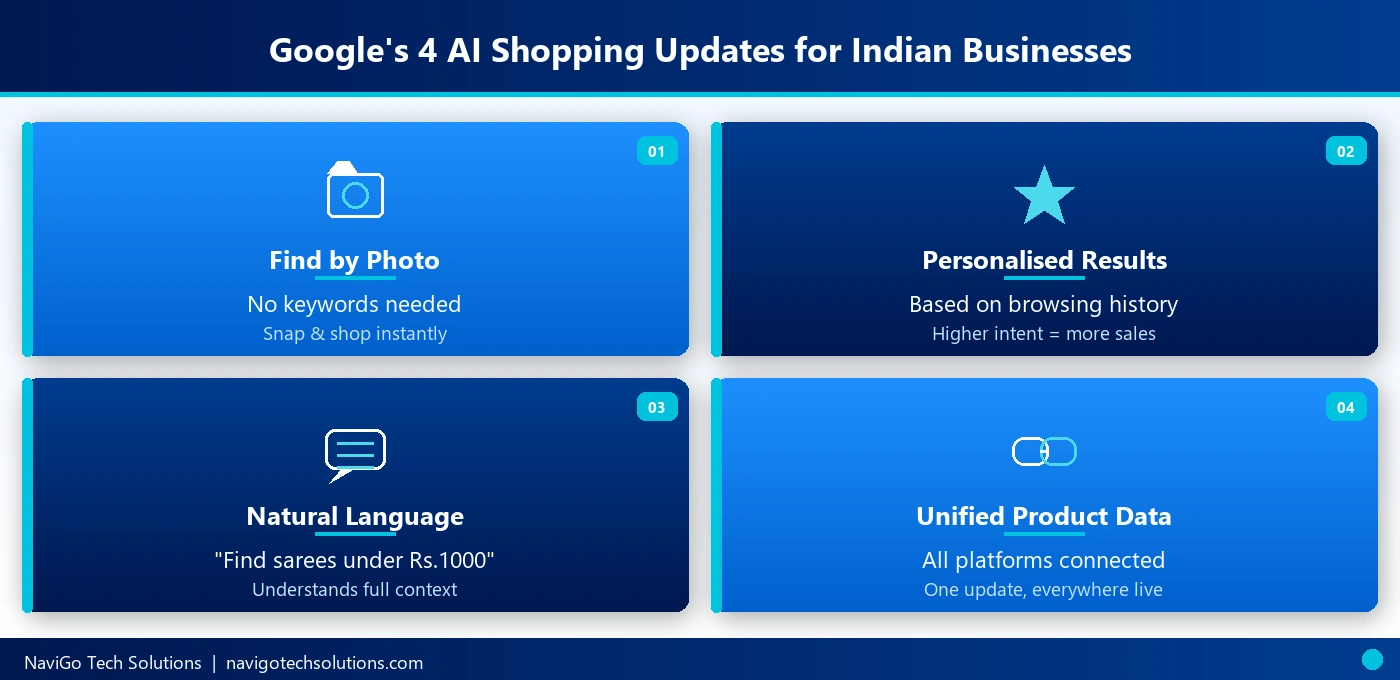
In April and May 2026, Google announced a series of major updates to how it handles shopping. These are not small tweaks. They fundamentally change how products appear in search results, how customers discover them, and how you as a business need to present your inventory.
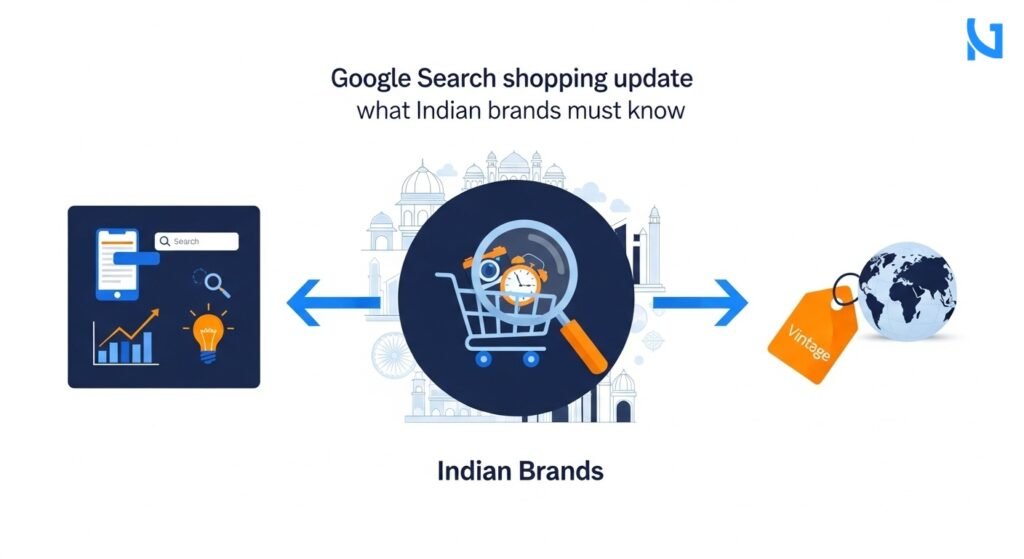
The most important change is the Universal Commerce Protocol. This replaces the earlier Shopping Graph. Think of it as a new universal language that Google uses to understand every product on the internet. It pulls data from your website, your product feeds, reviews, and even videos to create a complete picture of what you sell.
Alongside this, Google has added three new Gemini-powered features specifically for India. These let shoppers use natural language to find products. For example, a customer can type “cotton kurti under 1000 rupees with free delivery” and Google will understand the intent and show exactly matching products, not just keyword matches.
In fact, a Google and Deloitte report released in April 2026 says India’s e-commerce market is on track to reach $250 billion by 2030. These AI shopping tools are built to capture and serve that growing demand, especially from Gen Z shoppers who expect a conversational, visual, and fast shopping experience.
If you want a broader view of how Google’s AI is changing search overall, our guide on Google AI Updates in 2026 covers the bigger picture beyond just shopping.
Why These Updates Matter for Indian E-commerce in 2026
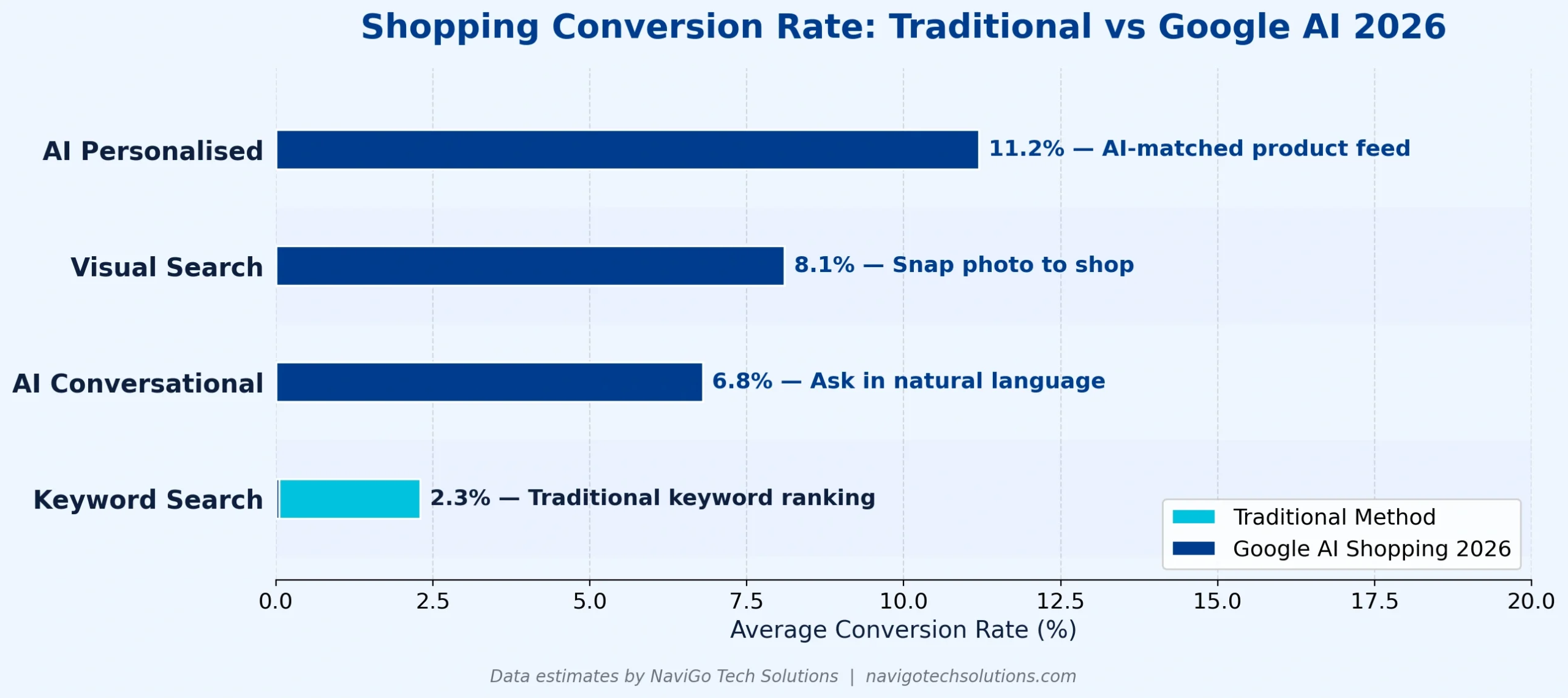
India’s E-commerce Is Growing Faster Than Ever
The $250 billion target by 2030 is not just a number. It signals that more Indians are shopping online every year. Tier 2 and Tier 3 cities are driving this growth. Google is building its AI tools to serve the next wave of internet users who prefer voice search and local language queries. For example, the new Gemini shopping features work with Hindi and other Indian languages, making it easier for customers in smaller towns to shop.
Conversational Search Is Replacing Keywords
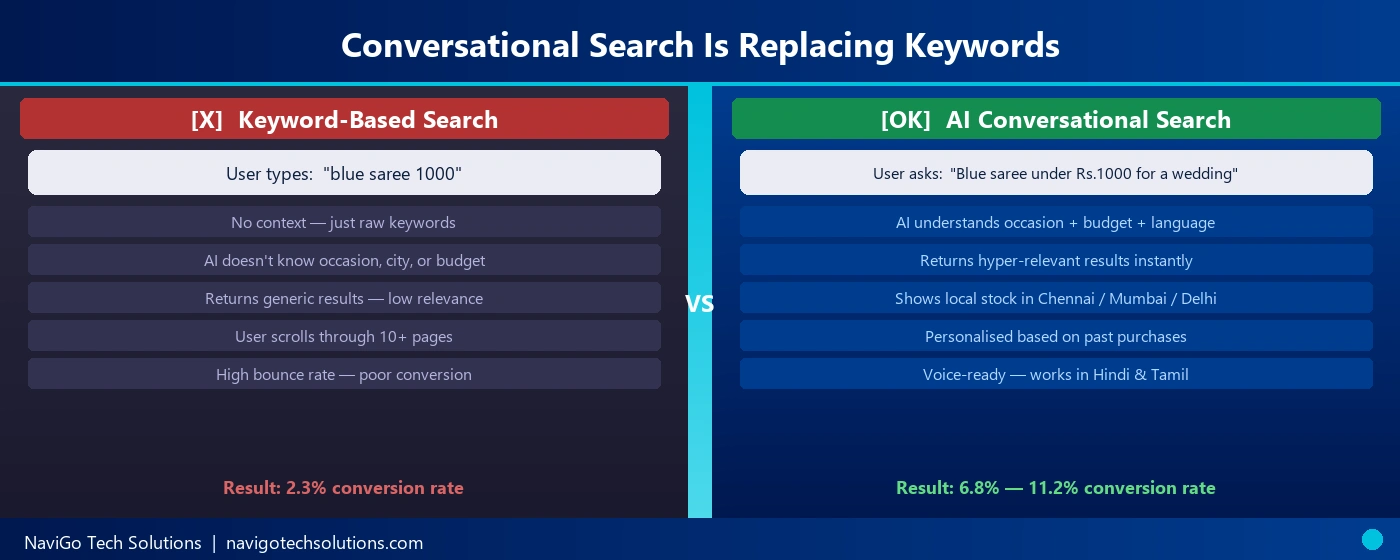
Customers no longer type “blue jeans” into a search bar. They now say things like “show me slim fit jeans for office under 2000 rupees with good fabric.” Google’s AI understands context. If your product feed does not include rich attributes like fit, colour, material, price range, and delivery details, your products will not appear in those results. This is a massive shift from old-school keyword stuffing.
Reviews and Visual Content Now Feed AI Decisions
Google’s AI now reads reviews, product descriptions, and even video content to decide which products to recommend. This means having authentic customer reviews and high-quality images is more important than ever. The AI looks for signals of trust and quality, not just keywords.
If you are also active on social media, you should know that social content now feeds into shopping recommendations. Our post on Social Media SEO in 2026 explains how this connection works.
Small Businesses Get a Fairer Playing Field
Google has designed the Universal Commerce Protocol to surface the most relevant product, not just the one with the biggest ad budget. If you provide complete, accurate, and rich product data, you can outrank larger competitors. This is good news for Indian small businesses.
How to Prepare Your Business for AI Shopping
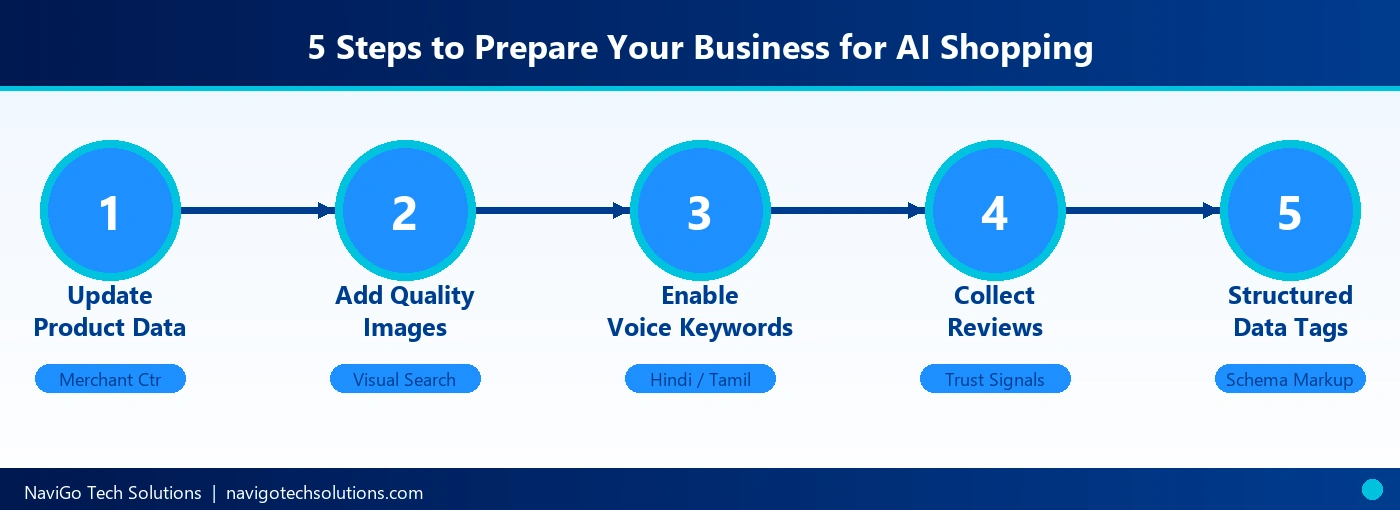
Here is a step-by-step action plan. Follow these steps to make sure your products appear in Google’s AI-powered shopping results.
- Step 1: Audit your product feed. Make sure every product has a clear title, accurate category, multiple high-resolution images, and a detailed description. Include attributes like size, colour, material, brand, and price. Google’s AI uses this data to match customer intent.
- Step 2: Enable structured data markup. Add schema.org markup for products on each product page. This helps Google’s Universal Commerce Protocol understand your inventory even without a feed. If you need help, our SEO optimization services can set this up for you.
- Step 3: Collect and display authentic reviews. Encourage customers to leave detailed reviews. Respond to them. The AI treats review volume and quality as a trust signal. Products with more positive reviews will be shown first.
- Step 4: Create video content for your products. Short videos showing the product from different angles or being used in real life help the AI understand and rank your products. Upload these to your website and to YouTube.
- Step 5: Use Gemini-powered ad formats. Google has introduced new ad formats that work with conversational search. Test these with a small budget. Our AI Ads and Automation team can help you set up campaigns that match the new shopping behaviour.
- Step 6: Check your website speed and mobile usability. Google’s AI prefers sites that load fast on mobile. Most Indian shoppers use a phone. If your site is slow, the AI will not show your products even if the data is perfect.
Common Mistakes Businesses Make and How to Avoid Them
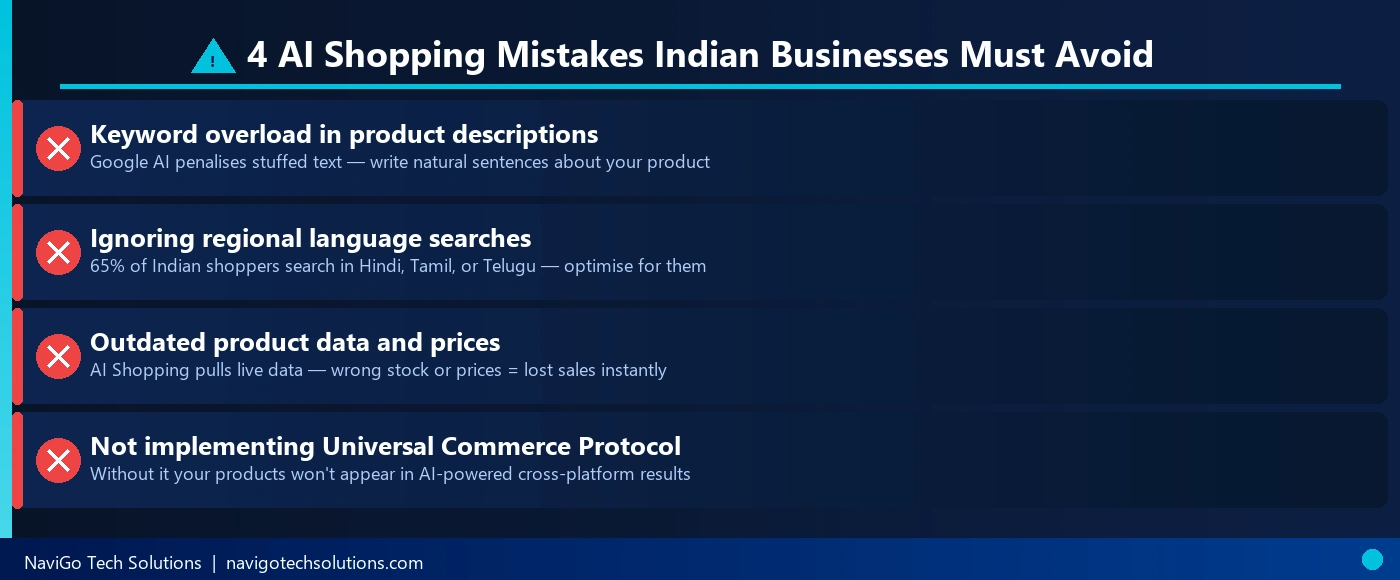
Mistake 1: Still Using Outdated Keyword Overload
Many businesses still stuff product titles with keywords. This confuses the AI. Instead of “Buy Blue Cotton Shirt Men Formal Office Wear Premium Quality,” use “Men’s Blue Cotton Formal Shirt.” Keep it clean and descriptive. Let the AI understand the product, not trick it.
Mistake 2: Ignoring Local Languages
Google’s Gemini features work with Hindi, Tamil, Telugu, and other Indian languages. If your product descriptions are only in English, you miss a growing audience. Add multilingual descriptions or at least key attributes in local languages to increase visibility.
Mistake 3: Not Updating Product Data Regularly
If a product goes out of stock, remove it. If the price changes, update the feed. Google’s AI penalises businesses that show inaccurate data. Customers who click and find a different price or an out-of-stock item will not trust your brand. Keep your feed fresh.
Mistake 4: Not Using the Universal Commerce Protocol Yet
Some businesses still rely on manual uploads to the old Merchant Center. The new protocol is automatic and richer. Connect your website directly using the new API. This ensures Google always sees your latest inventory. If this sounds complex, we can help you through our AI digital marketing services.
Comparison: Old Shopping Graph vs Universal Commerce Protocol
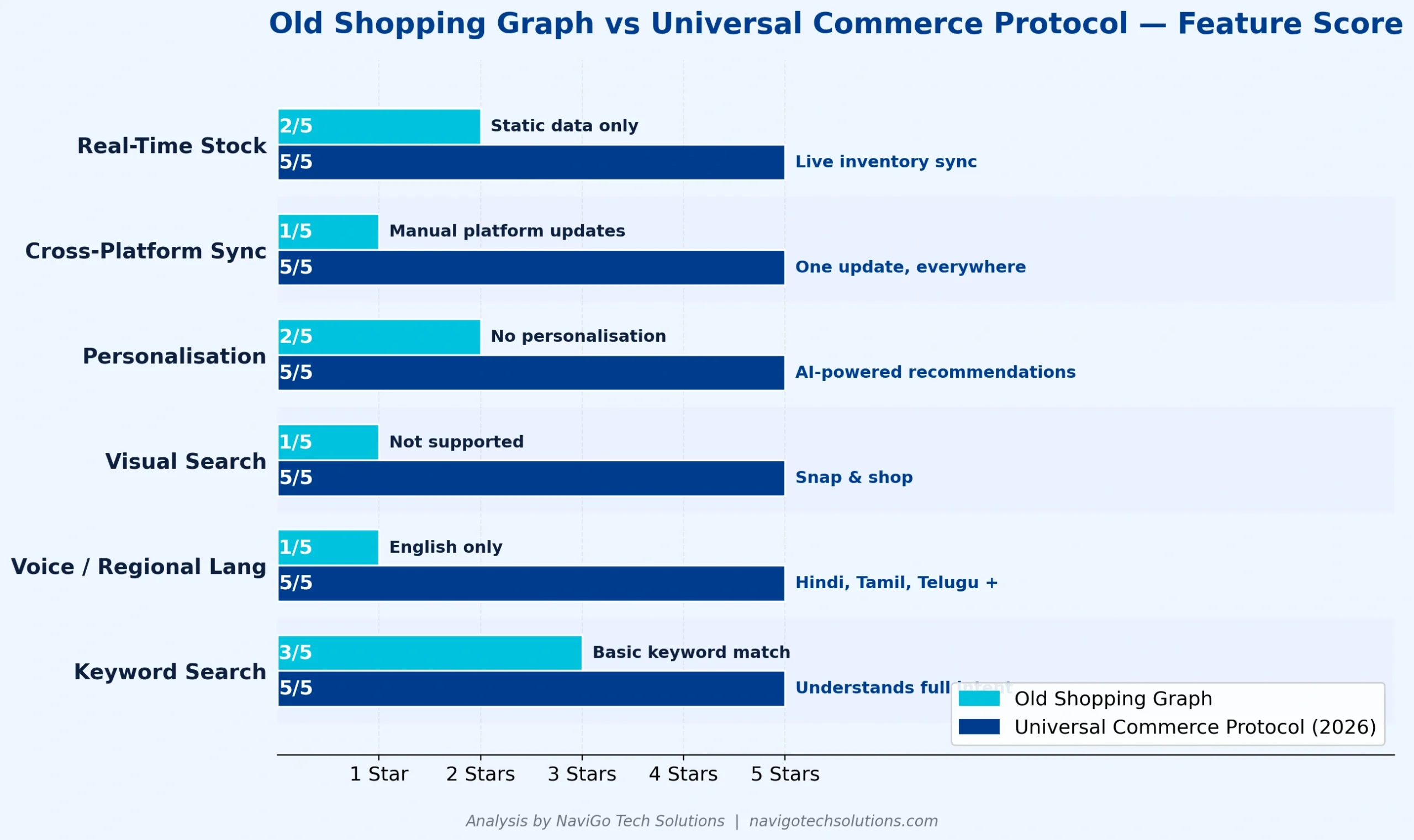
To understand the scale of change, here is a direct comparison between the old system and the new Universal Commerce Protocol that Google introduced in May 2026.
| Feature | Old Shopping Graph | Universal Commerce Protocol | What It Means for You |
|---|---|---|---|
| Data sources | Product feeds only | Feeds, websites, reviews, videos, social signals | You need to optimise more than just your feed |
| Query matching | Keyword matching | Natural language and intent understanding | Describe products naturally; stop keyword stuffing |
| Language support | English and a few others | Full support for Indian languages via Gemini | Add product details in Hindi, Tamil, Telugu etc. |
| Trust signals | Manual ratings and price | AI analyses reviews, returns policy, shipping speed | Offer clear policies and fast shipping to rank better |
| Update speed | 24 to 48 hours | Real-time updates | Keep your inventory and prices always current |
| Ad integration | Separate campaign setup | Unified with AI shopping ads automatically | Test the new ad formats; they work better with the protocol |
The Universal Commerce Protocol is a major leap. If you optimise for it now, you will be ahead of most Indian businesses that are still using the old methods. For a deeper guide on making your online store rank higher, read our E-commerce SEO 2026 guide.