- How Google’s vintage shopping update promotes second-hand and sustainable products in search results
- Why the Universal Commerce Protocol and AI tools from Google I/O 2026 matter for your e-commerce store
- A practical 5-step optimisation plan to help your vintage or sustainable brand rank higher
- The biggest mistakes Indian sellers make and how to fix them
What Is the Google Vintage Shopping Update?
In May 2026, Google announced a major shift in how it surfaces shopping results. The company introduced what it calls a “new era for AI Search” and alongside it, the Universal Commerce Protocol. This protocol helps retailers present product data in a standardised way, making it easier for Google’s AI to understand and rank items.
Part of this change includes a specific focus on vintage and second-hand products. Google now uses AI to identify items that are pre-owned, upcycled, or sustainably made. These products get special treatment in search results, appearing in a dedicated carousel or with a “pre-loved” badge. This is a direct response to growing consumer demand for ethical shopping. A 2026 article from Marie Claire UK listed 24 labels for ethical shoppers, showing that the trend is global. Indian buyers are also shifting towards sustainable fashion, and Google wants to serve that intent better.
For Indian brands, this update means that if you sell vintage sarees, refurbished electronics, or handmade crafts, Google will now try to surface your products ahead of mass-produced goods when a user searches for something like “vintage lehenga” or “sustainable home decor.” But to get that visibility, your product data must be structured correctly.
Why This Update Matters for Indian Brands in 2026
The vintage shopping update is not just a tweak. It represents a fundamental change in how Google views e-commerce. Here is why Indian brands need to pay attention.
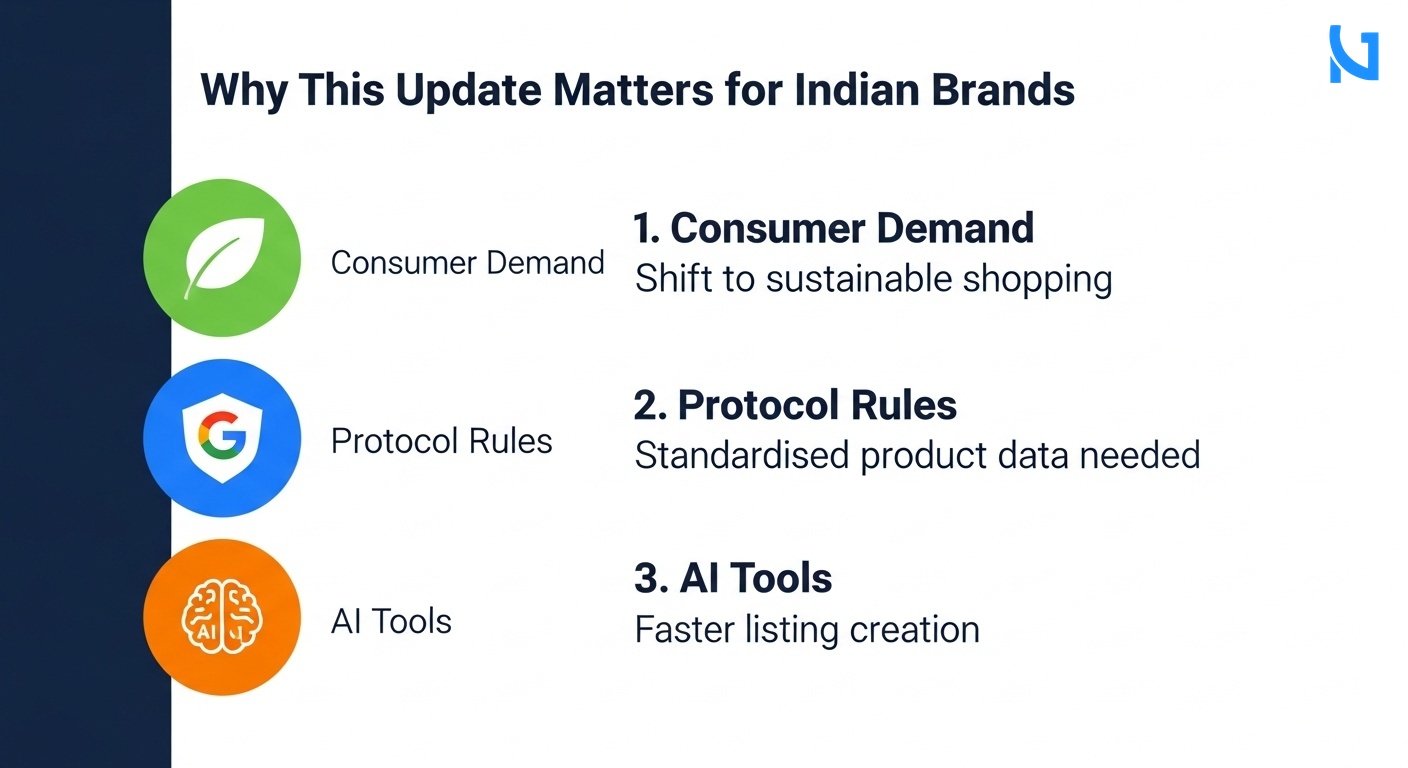
Growing Demand for Sustainable Shopping in India
Indian consumers are increasingly choosing second-hand and sustainable products. Platforms like Instagram and WhatsApp groups have fuelled a thriving thrift culture. By 2026, this trend has become mainstream. Google’s update directly aligns with this consumer behaviour. If your brand sells pre-loved or ethically sourced products, Google wants to reward you with visibility.
Google’s Universal Commerce Protocol Changes the Rules
Announced at Google I/O 2026, the Universal Commerce Protocol provides a standard way for retailers to submit product data. This includes fields for product condition (new, used, refurbished), sustainability certifications, and material sourcing. Brands that adopt this protocol see better indexing and richer search results, including the new “pre-loved” badge. Ignoring it means your products may not appear in these special sections at all.
AI Tools Help You Create Better Product Listings
Google also introduced new AI tools that help retailers generate product descriptions, optimise images, and even create personalised shopping experiences. For example, you can use Google’s AI to automatically tag products as vintage or sustainable based on your input. This reduces manual work and improves accuracy. For a small team in Chennai or Jaipur, this is a huge time saver. Learn more about how AI can streamline your marketing in our AI Ads & Automation services.
How to Optimise Your Vintage Brand for Google’s New Search
Here is a simple step-by-step plan to ensure your products get the best visibility under the new update.
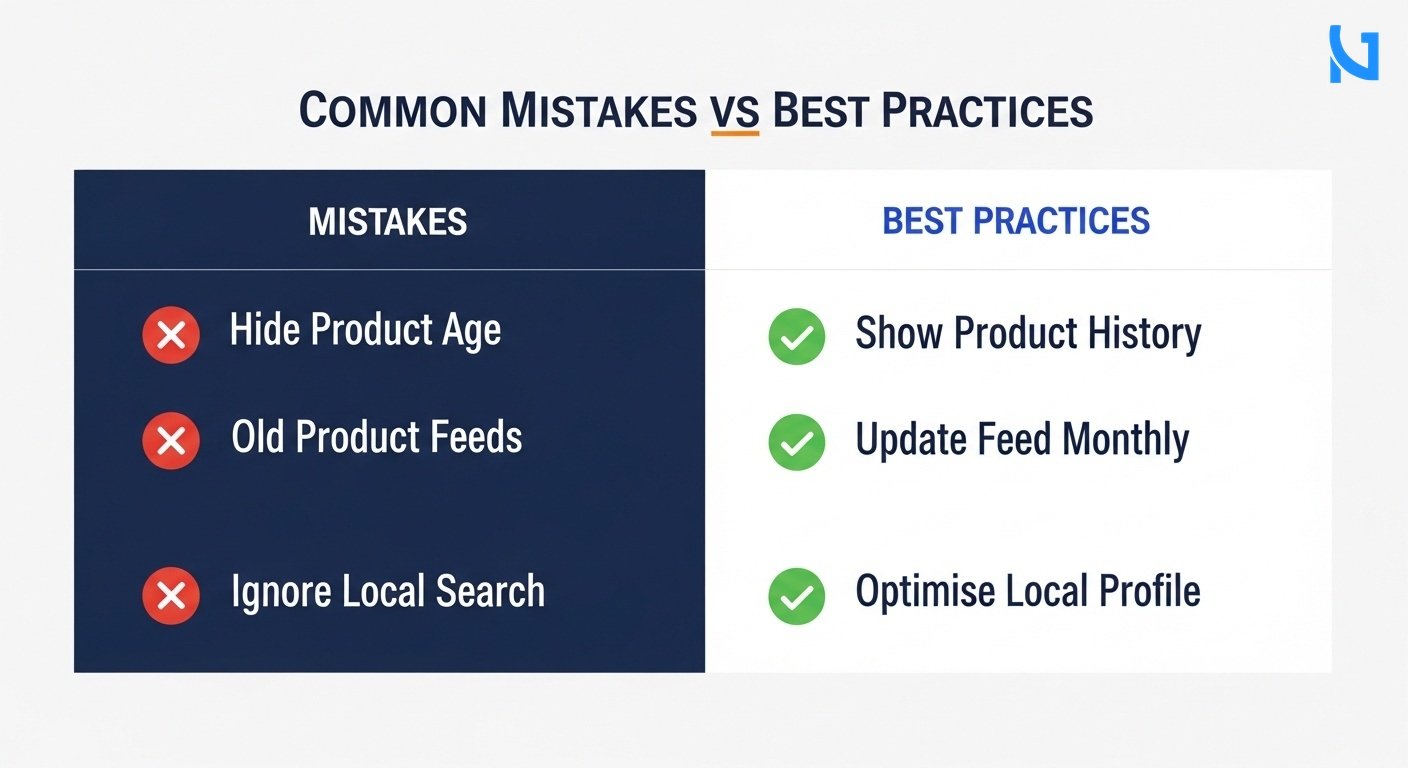
- Step 1: Audit Your Product Data. Make sure every product has clear information about its condition. Use terms like “vintage,” “pre-owned,” “refurbished,” or “upcycled” in your titles and descriptions. If you sell a 1990s cotton saree, say exactly that. Do not hide the fact that it is second-hand. Google’s AI can now detect this and will reward clarity.
- Step 2: Adopt the Universal Commerce Protocol. Work with your web developer or e-commerce platform to ensure your product feeds include all the new fields recommended by Google. This includes condition, material, production date, and certifications. If you use Shopify, check if your theme supports these fields. If you need help, our Web Development team can assist.
- Step 3: Use High-Quality Images with Context. Google’s AI now analyses images to understand product condition. Upload clear photos that show wear and tear honestly. A slightly faded kurta is fine, just show it. Also include lifestyle images that show the product being used sustainably.
- Step 4: Leverage Local SEO. Many vintage shoppers search for “thrift store near me” or “vintage market in Jaipur.” Make sure your Google Business Profile is updated and includes your product categories. Read our Local SEO Guide for Chennai for tips that apply to any Indian city.
- Step 5: Build Social Proof. Google considers social signals from platforms like Instagram and YouTube. If you post about your vintage finds on social media, ensure your website is linked and your content is indexed. Check out our article on Social Media SEO in 2026 for more details.
Common Mistakes to Avoid When Adapting to This Update
Many Indian brands rush to adapt but make easily avoidable errors. Here are the most common ones.
Mistake 1: Hiding the Fact That a Product Is Used
Some sellers worry that calling a product “vintage” or “used” will reduce its value. But Google’s AI is trained to identify pre-loved items. If you try to pass a used product as new, you risk being penalised. Instead, be proud of the product’s history. Frame it as a unique story. For instance, a “1990s Banarasi saree in excellent condition” is far more appealing than “new saree” which is misleading.
Mistake 2: Not Updating Product Feeds
Many small businesses set up their product feed once and never update it. The Universal Commerce Protocol requires new fields. If your feed is outdated, Google may not index your products correctly. Spend time with your web developer to ensure your feed includes condition, material, and certification data. If you are unsure where to start, our SEO Optimization service can audit your feed and fix issues.
Mistake 3: Ignoring Local Search
The vintage shopping update also boosts local results. If you run a physical store in Jaipur or a pop-up in Chennai, you need to rank for “vintage shop in [city].” Many sellers focus only on national keywords and miss local traffic. Update your Google Business Profile, add photos of your store, and encourage customer reviews. This is especially important if you sell at a known location like Johari Bazaar in Jaipur, which Condé Nast Traveller India highlighted as a top shopping destination in 2026.
Sustainable Fashion Certifications Every Indian Brand Should Consider
One of the new features in Google’s Universal Commerce Protocol is the ability to include sustainability certifications. These badges help your products stand out. But which certifications should an Indian brand pursue? Here is a comparison of the most relevant ones.
| Certification | Best For | Cost Range (INR) | Google Recognition |
|---|---|---|---|
| GOTS (Global Organic Textile Standard) | Organic cotton and natural fibre products | 50,000 – 1,50,000 | High — directly supported in product feeds |
| Fairtrade India | Ethical sourcing and fair wages | 20,000 – 80,000 | Medium — recognised but less common in feeds |
| OEKO-TEX Standard 100 | Textiles free from harmful substances | 30,000 – 1,00,000 | High — widely used in European and Indian exports |
| USDA Organic (for cotton) | Organic cotton products | 1,00,000 – 3,00,000 | High — strong signal for Google’s AI |
| India Organic (Jaivik Bharat) | Indian organic products | 10,000 – 40,000 | Medium — growing recognition |
| Self-Declared Certifications (e.g., “Handloom Mark”) | Small artisans and vintage sellers | Free to 5,000 | Low — but still better than none |
If you are a small vintage seller in Chennai, starting with a self-declared certification like “Handloom Mark” is a low-cost way to show Google that your products are authentic. As you grow, consider GOTS or Fairtrade. For more help with structuring your product data for Google, reach out to our AI Strategy Consulting team.
Not sure which tool fits your business?
Our team at NaviGo Tech Solutions will set it up for you — free 30-minute strategy call.