- The core slash commands that control planning, review, memory and automation
- What MCP servers are and the 5–7 you should actually install
- Which tools to use for frontend, backend, security scanning and design
- How to build a safe, high-output AI development workflow without breaking things
What Is Claude Code?
Claude Code is an agentic coding tool from Anthropic that runs in your terminal (and inside
VS Code, JetBrains, the desktop app and the web). Unlike a chat window that only suggests code, Claude Code
can actually read and edit files, run commands, browse your repo, execute tests, and open pull requests — it
acts on your project the way a junior developer would, but at machine speed.
It is powered by Anthropic’s most capable models (the Claude 4.x family, with Opus 4.8 as the flagship in
2026) and is extended through three layers that this guide focuses on: slash commands for
control, Agent Skills for reusable expertise, and MCP servers for
connecting to the outside world. For a wider view of where it sits, see our breakdown of the
Top 25 AI Tools in 2026.
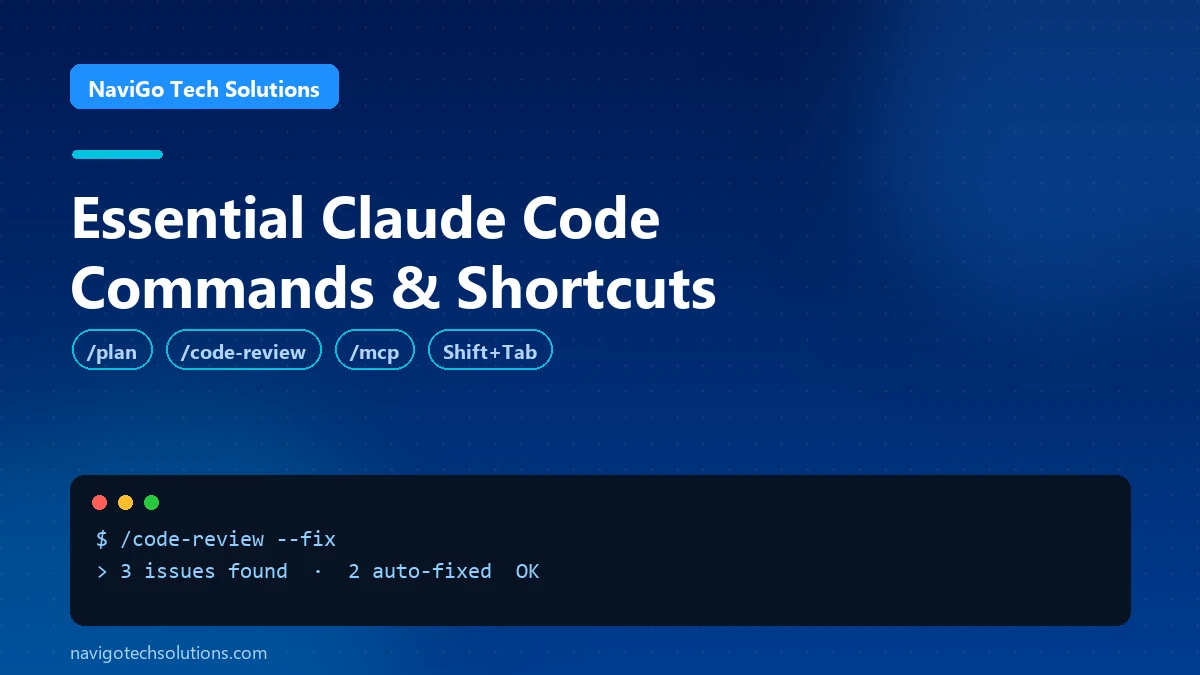
Essential Slash Commands Every User Should Know
Slash commands are how you steer a session. Type / in any active session to see the full list
with autocomplete. These are the ones that matter most day to day, grouped by what they do.
Setup & Context
| Command | What it does |
|---|---|
/init |
Scans your project and generates a starter CLAUDE.md memory file |
/memory |
Edit memory files and toggle persistent auto-memory |
/context |
Visualise how much of the context window is being used |
/compact |
Summarise the conversation to free up context |
/clear |
Start a fresh conversation (the old one is saved for later) |
Planning & Quality
| Command | What it does |
|---|---|
/plan |
Forces Claude to explain its approach before touching code |
/code-review |
Reviews your current diff for bugs and cleanups (low to ultra effort) |
/security-review |
Read-only, security-focused review of pending changes |
/simplify |
Cleanup-only pass for reuse and readability (no bug hunting) |
/verify & /run |
Actually launch the app and confirm a change works |
Power & Automation
| Command | What it does |
|---|---|
/model |
Switch models mid-session (e.g. fast Haiku vs. deep Opus) |
/agents |
Configure specialised subagents for parallel work |
/mcp |
Connect and manage MCP servers |
/permissions |
Set allow / ask / deny rules so the agent stays inside guardrails |
/loop & /schedule |
Repeat a task on an interval or as a recurring cloud job |
/rewind |
Roll code and context back to an earlier checkpoint |
You can also create custom commands by dropping a Markdown file into
~/.claude/commands/ — each file becomes its own slash command, perfect for codifying your team’s
repeatable workflows (e.g. a /ship command that tests, builds and tags a release).
Session, Git & Account Commands
| Command | What it does |
|---|---|
/resume |
Reopen a previous conversation by ID or name |
/cost |
Show token usage and cost for the current session |
/commit |
Stage and commit with an auto-generated message |
/pr |
Generate a pull request from your current work |
/review |
Review the current branch (PR-style review) |
/todos |
Show the todo list the agent is tracking |
/hooks |
Inspect and manage automation hooks |
/config |
Open the settings UI (model, editor mode, theme) |
/add-dir <path> |
Grant access to an additional directory |
/fast |
Toggle Fast mode (Opus with faster output) |
/status & /doctor |
Show account/version info; diagnose install issues |
/bug |
File a bug report to Anthropic with session context |
Terminal CLI Flags (before you start)
These run from your shell when launching claude — ideal for scripting and CI.
| Flag | What it does |
|---|---|
claude "<task>" |
One-shot: run a task and exit |
-c / --continue |
Continue the most recent session |
-r <id> / --resume |
Resume a specific session by ID |
-p / --print "<task>" |
Non-interactive: print the result to stdout (scripting) |
--model <name> |
Pick the model (opus, sonnet, haiku) |
--permission-mode <mode> |
Run in plan/read-only or other permission modes |
--add-dir <path> |
Allow access to another directory |
--verbose |
Show tool calls as they happen |
Keyboard Shortcuts & Power Input
| Key | What it does |
|---|---|
Shift + Tab |
Cycle plan mode → accept-edits → auto mode |
Esc |
Interrupt the current response |
Esc Esc |
Open the rewind / history picker |
Ctrl + C |
Stop the current turn (press twice to exit) |
Ctrl + R |
Reverse-search previous prompts |
Tab |
Autocomplete commands, file paths and @-mentions |
@file |
Pull a file (or folder/URL) into context |
!command |
Run a one-off bash command inline |
#text |
Add a fact to memory on the fly |
Prefer modal editing? Turn on Vim mode via /config → Editor mode for full
normal-mode navigation (h/j/k/l, w/b/e), operators (d, c,
y, p) and text objects.
Agent Skills — and How to Build Your Own
Agent Skills are reusable packets of expertise. A Skill is a folder with a
SKILL.md file describing a task, when to trigger it, and any scripts or references it needs.
When your request matches a Skill’s description, Claude Code automatically loads it — so the model gets
expert, repeatable instructions instead of improvising each time.
The Skills most teams rely on in 2026, ranked by everyday usefulness, are:
- Code review — consistent, opinionated review of every diff
- Test writing — generating and maintaining unit and end-to-end tests
- Parallel batch work — splitting big changes across multiple agents
- Debugging — structured root-cause analysis instead of guesswork
- Release flows — repeatable build, tag and deploy steps
Building your own is easy: install Anthropic’s official Skill Creator with
/plugin install skill-creator@claude-plugins-official. It runs an interactive Q&A — asking
what workflow to automate, the trigger conditions, and how to handle edge cases — then generates a complete
Skill directory with correct structure and frontmatter. Skills can be committed to your repo (project scope),
shipped inside plugins, or rolled out organisation-wide. They are also portable: the same
SKILL.md format works across Codex CLI, Gemini CLI and other compatible agents.
Where to find ready-made Skills (clickable)
You don’t have to build everything yourself — these curated, open-source collections let clients install proven Skills in minutes:
- awesome-claude-skills — a curated list of Skills and resources for Claude workflows
- awesome-claude-skills (karanb192) — 50+ verified Skills: TDD, debugging, git workflows, document processing
- claude-skills (alirezarezvani) — 330+ skills, 30+ agents, 70+ commands across engineering, marketing, product & finance
- awesome-claude-code-subagents — 100+ specialised subagents for different development tasks
- awesome-claude-code-toolkit — the all-in-one kit: agents, skills, commands, plugins, hooks & MCP configs
MCP Servers: The Must-Have List
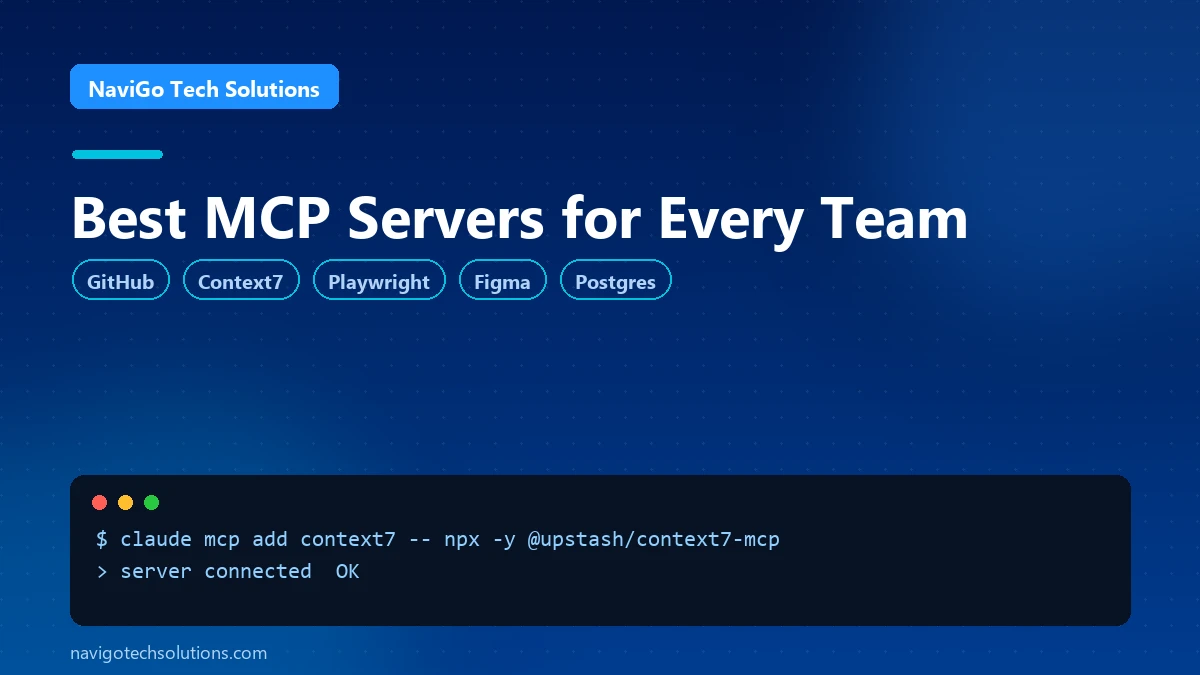
MCP (Model Context Protocol) servers connect Claude Code to the outside world — GitHub,
databases, browsers, design tools and more. There are over 12,000 of them, but the experts agree on a hard
truth: fewer is better. Three servers is the sweet spot, five to seven is the practical
ceiling. Beyond that, tool-selection accuracy degrades and token overhead grows.
These few cover roughly 80% of real workflows:
| MCP Server | Best for | What it unlocks (with link) |
|---|---|---|
| GitHub | Everyone | Read issues, manage PRs, search code, trigger CI/CD — the single highest-impact install. github/github-mcp-server |
| Context7 | Everyone | Pulls up-to-date library and framework docs so code uses current APIs. upstash/context7 |
| Filesystem | Everyone | Full directory awareness inside a security boundary you control. modelcontextprotocol/servers |
| Playwright | Frontend / QA | Drives a real browser to click, fill forms, screenshot and verify UI. microsoft/playwright-mcp |
| Figma | Frontend / Design | Reads design tokens, layers and variants straight from Dev Mode. Figma Dev Mode MCP |
| PostgreSQL | Backend / Data | Direct queries, schema inspection and data analysis. modelcontextprotocol/servers |
| Sentry | Backend / Ops | Pulls live error reports and stack traces for faster debugging. getsentry/sentry-mcp |
| Brave Search | Research | Live web search for current information and references. modelcontextprotocol/servers |
Browse the full, official catalogue at the
Model Context Protocol servers repo
or search thousands more in the
community MCP registry.
Most servers install in one line, for example:
claude mcp add context7 -- npx -y @upstash/context7-mcp. Then manage them anytime with the
/mcp command.
MCP Servers for Popular Apps (full link list)
Almost every tool your business already uses now has an MCP server, so Claude Code can read from and act in
it directly. Below is a categorised, clickable list of the most-used ones. Prefer the
vendor-maintained / official servers where they exist.
💬 Communication & Productivity
| App | Use case | Link |
|---|---|---|
| Slack | Read/send messages, search channels | modelcontextprotocol (Slack) |
| Gmail + Google Workspace | Gmail, Drive, Calendar, Docs, Sheets | taylorwilsdon/google_workspace_mcp |
| Notion | Pages, databases, content management | makenotion/notion-mcp-server |
| Atlassian (Jira/Confluence) | Issues, projects, JQL search | sooperset/mcp-atlassian |
| Linear | Issue tracking & project management | Linear MCP (official) |
🛠️ Developer, DevOps & Data
| App | Use case | Link |
|---|---|---|
| GitHub | Repos, issues, PRs, CI/CD | github/github-mcp-server |
| Sentry | Error reports & stack traces | getsentry/sentry-mcp |
| Cloudflare | Workers, DNS, deployments, logs | cloudflare/mcp-server-cloudflare |
| Supabase | Database, auth, edge functions | supabase-community/supabase-mcp |
| PostgreSQL / Filesystem | Queries, schema, local files | modelcontextprotocol/servers |
| Playwright | Browser automation & UI testing | microsoft/playwright-mcp |
💳 CRM, Payments & Design
| App | Use case | Link |
|---|---|---|
| HubSpot | CRM contacts, deals, marketing data | HubSpot MCP (official) |
| Stripe | Payments, customers, invoices | stripe/agent-toolkit |
| Figma | Design tokens, layers, variants | Figma Dev Mode MCP |
| Canva | Generate, edit & export designs/PNGs | Canva MCP (official) |
| Context7 | Live, version-correct library docs | upstash/context7 |
Looking for something not listed? Browse 12,000+ servers in curated directories like
awesome-mcp-servers
and appcypher/awesome-mcp-servers,
or the official MCP Registry.
Connecting any of them is documented in the
official Claude Code MCP guide.
🚀 One-Click Install Commands (copy & paste)
Each command below is ready to run — just hit Copy, paste it into your terminal where
Claude Code is installed, and press Enter. Remote (cloud) servers will open a browser to sign in;
local ones run via npx/uvx. Where a command needs your own value
(a path, a database URL, a project ref) it’s shown in CAPITALS — replace it before running.
☁️ Remote / cloud apps (OAuth sign-in)
💻 Local servers (run via npx / uvx)
Tip: add --scope user to make a server available in every project, or
--scope project to share it with your team via the repo. Check what’s connected anytime by
running claude mcp list or the /mcp command. Several remote endpoints
(e.g. Cloudflare, Zapier, Asana, Intercom) change per account — find your exact URL in each app’s docs.
⚠️ Security note: Security scans found issues in roughly two-thirds of public MCP servers.
Stick to vendor-maintained servers (GitHub, Figma, Sentry, Microsoft) or official reference servers, and use
read-only database connections unless you fully trust the agent and have backups.
By Department: Using Claude Code Across Your Whole Team
Here is how the same tool serves very different roles — the point your request is really about.
🎨 Frontend Development
Pair Claude Code with the Figma and Playwright MCP servers. Figma feeds it
exact design tokens, auto-layout and component variants, so generated components match the design instead of
approximating it. Playwright then lets Claude open a real browser and confirm the UI actually renders and
behaves correctly. Use the /verify and /run commands to see the change live before
you trust it.
⚙️ Backend Development
GitHub + Context7 covers most backend work, with PostgreSQL MCP added when
a problem involves both code and data. Claude Code can inspect schemas, write and optimise queries, build API
endpoints, and wire up tests — then open a PR for review. Lock writes behind a read-only DSN until you are
confident.
🛡️ Security Scanning & Auditing
Run /security-review for a read-only, security-focused pass over pending changes — it flags
injection risks, secrets, and unsafe patterns without modifying anything. Combine it with the
Sentry MCP for error monitoring and a code-scanning Skill for repeatable
audits. This is ideal for authorised security testing and reviewing your own codebase before release.
🖼️ Creating Images (PNG & Graphics)
Claude Code can generate visuals through connected tools — for example a Canva MCP to
generate, export and resize designs (logos, social cards, PNGs), or by writing and running image-generation
scripts (the same way NaviGo’s own automation creates featured graphics). It can produce SVGs and diagrams
directly in code, then convert and export them to PNG or WebP for the web.
✏️ Editing, Refactoring & Cleanup
Editing existing work is where Claude Code shines. It performs precise, multi-file edits, large-scale
refactors, and renames while keeping the code consistent with what surrounds it. Use /simplify
for readability and reuse passes, and /rewind to safely undo a direction you don’t like. It can
also edit images and assets through connected design tools, not just text.
Top GitHub Projects & Open-Source Resources
A huge community has grown around Claude Code. These are some of the most useful open-source projects worth
bookmarking:
- Master list: awesome-claude-code — the curated index of skills, hooks, slash-commands, orchestrators, apps & plugins. Start here.
- Orchestration: Claude-Flow (enterprise multi-agent platform) and claude-squad manage teams of agents in parallel.
- Subagents: awesome-claude-code-subagents — 100+ ready-made specialist agents.
- GUIs & clients: opcode (formerly Claudia — desktop GUI & toolkit) and Happy (mobile/web client with voice) take Claude Code beyond the terminal.
- Usage & cost tracking: ccusage and ccstatusline show token usage and spend from your local sessions.
- Official: claude-cookbooks and the Claude Agent SDK for building custom agents on the same engine.
Tip: Treat third-party plugins and MCP servers like any dependency — review what they do
and prefer well-maintained, popular projects before granting them access to your code and credentials.
Best Practices & Safety
- Start with a
CLAUDE.md. Run/initso the agent knows your conventions, commands and guardrails. - Plan before big changes. Use
/planon anything non-trivial so you approve the approach first. - Keep your MCP stack lean. Five well-chosen servers beat twenty. Add more only when a real weekly need appears.
- Use read-only by default. For databases and production systems, give the agent the least access it needs.
- Review the diff. Always run
/code-reviewor/security-reviewbefore merging AI-written code. - Codify repeat work. Turn your common workflows into custom commands and Skills so quality stays consistent.
Used this way, Claude Code becomes a force multiplier for a small team — handling the repetitive 70% so your
people focus on judgement, design and strategy. That is exactly the kind of practical AI workflow we help
Indian businesses set up at
NaviGo Tech Solutions.