- How AI Overviews cut position one CTR from 28% down to 2.1%
- The five mandatory schema types for AI citation eligibility in 2026
- How Answer Engine Optimization (AEO) delivers a 35% CTR uplift
- A proven 90-day roadmap to stop and reverse the traffic collapse
- What Is Habitual Traffic Collapse and Why It Matters for Indian Publishers
- Why AI Overviews and the Discover Update Are the Root Cause
- Step-by-Step Fix to Recover from Traffic Collapse
- Common Mistakes Indian Publishers Make When Trying to Recover
- AEO vs SEO: Which Framework Works for Indian Publishers in 2026
What Is Habitual Traffic Collapse and Why It Matters for Indian Publishers
Habitual traffic collapse is the term used to describe the sustained, month-on-month decline in organic search and discovery traffic that Indian digital news publishers have faced since early 2025. Unlike a one-time algorithm update penalty, this collapse is structural. It is driven by Google AI Overviews answering queries directly on the search results page, leaving no reason for users to click through to publisher websites.
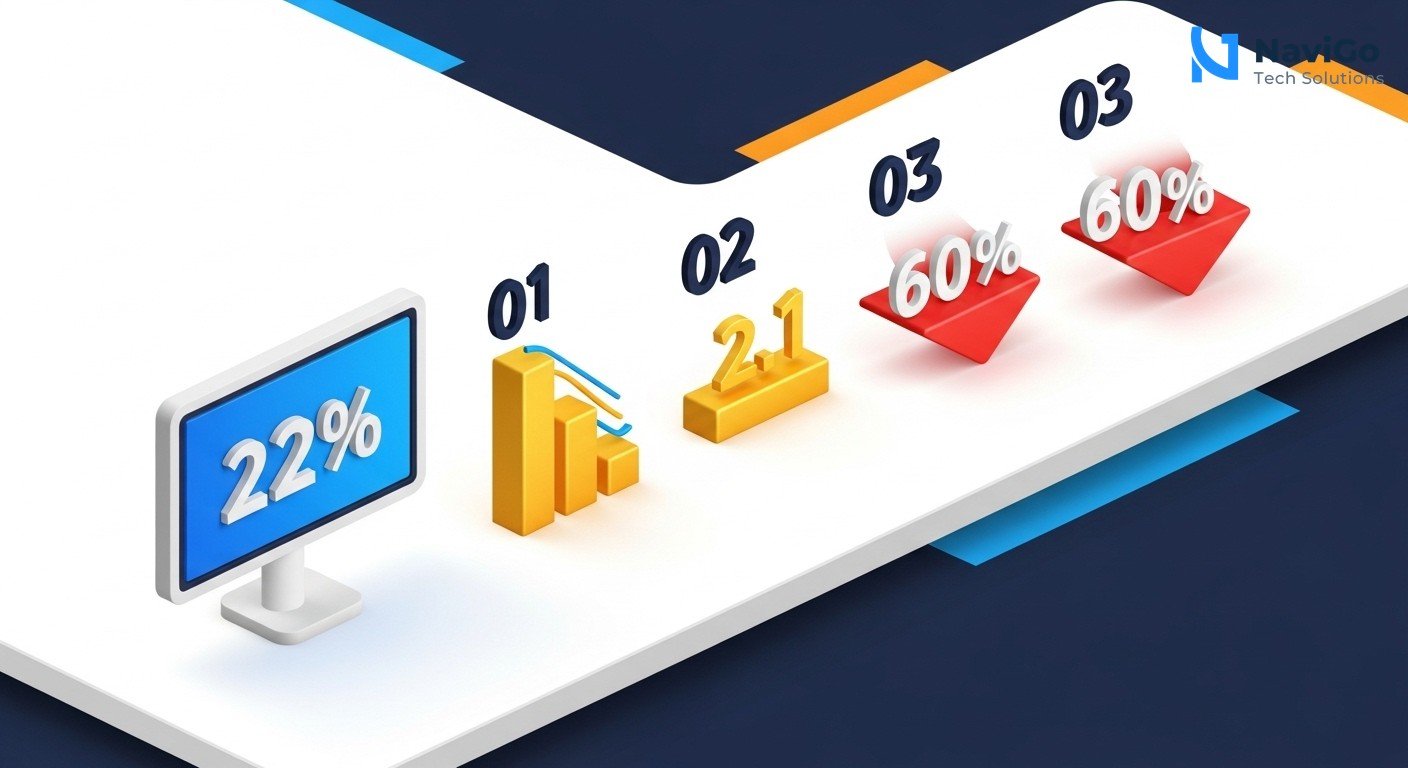
Data from the Professional Publishers Association shows that for a representative query, CTR dropped from 5.1% to 0.6% over twelve months. Position one CTR with an AI Overview present is now as low as 2.1% in 2026, compared to approximately 28% in 2023. That is a 93% drop in click-through rate for what used to be the most valuable spot on Google.
For Indian publishers this is existential. Combined daily circulation of Indian newspapers is now roughly 60 million copies, half of what it was a decade ago. Digital traffic has fallen sharply too. In April 2026, 44 out of the world’s 50 largest English-language news websites recorded year-on-year declines. The Indian names hit hardest include Hindustan Times (-50%), The Indian Express (-33%), News18 (-26%), and India.com (-66%).
This is not a temporary dip. It is a structural shift in how users find news. The fix requires moving from traditional search engine optimization to a new framework called Answer Engine Optimization. We at NaviGo Tech Solutions have seen this work for our publishing clients.
Why AI Overviews and the Discover Update Are the Root Cause
Two major Google changes are driving the habitual traffic collapse for Indian publishers.
AI Overviews Are Eating Clicks
AI Overviews now appear on 18% to 22% of all queries. In health verticals that number jumps to over 51.6%. When a user searches for a news topic, Google’s AI generates a summary from multiple sources. The user gets the answer without clicking a single link. Publishers who used to rely on that traffic find themselves invisible.
February 2026 Discover Core Update
On February 5, 2026, Google rolled out its first Discover-specific core update. This update introduced demotion signals for clickbait headlines, sub-1200px hero images, and missing max-image-preview:large directives. Several publishers reported 40% to 60% drops in Google Discover traffic immediately after this update rolled out. Topic authority became a major ranking signal for Discover.
What This Means for Indian Publishers
Indian publishers have historically relied on Google Discover for a large share of their mobile traffic. The February 2026 update effectively penalised sites that did not follow the new image specifications and content quality guidelines. Publishers who had not updated their article templates or image sizing lost half their Discover traffic overnight.
The One Bright Spot: AEO Works
Publishers who adopted Answer Engine Optimization early saw recovery. AEO can deliver a 35% CTR uplift on queries where the publisher is cited in an AI Overview. Realistic traffic recovery in the first year is 25% to 35% of pre-collapse levels. That is the difference between survival and shutting down.
Step-by-Step Fix to Recover from Traffic Collapse
Here is the exact process we recommend for Indian publishers who want to reverse the habitual traffic collapse.
- Step 1: Audit your current citation-share baselines. Use tools like Profound, Otterly.AI, or AthenaHQ to measure how often your content is cited in AI Overviews. Identify the top 50 pages that lost the most traffic. This gives you a starting point.
- Step 2: Fix high-frequency schema errors. Deploy the five mandatory schema types for full AI Mode citation eligibility in 2026: Article (or NewsArticle), FAQPage, HowTo, BreadcrumbList, and Organization. Correctly implemented schema can remove 60% of the citation gating algorithms used by LLMs.
- Step 3: Deploy the full eight-tag schema stack. Add Speakable, VideoObject, and ImageObject schemas to complement the mandatory five. Apply this stack to your top 50 traffic pages first. This maximizes eligibility for citation in Perplexity, SearchGPT, and Google AI Overviews.
- Step 4: Fix image specifications for Discover. Ensure every article has a hero image of at least 1200px width. Add the max-image-preview:large directive to your robots meta tag. Update your content management system to enforce this automatically for new articles.
- Step 5: Set a publishing cadence of three articles per week per topic cluster. Google Discover now heavily weights topic authority. You need consistent output on the same topics to build authority. This is non-negotiable for Discover ranking.
- Step 6: Add visible last-updated dates and changelog blocks. Google is prioritizing freshness. Articles with a visible “last updated” timestamp and a changelog at the bottom compound topic authority in Discover. Refresh your top articles monthly.
- Step 7: Integrate original research and surveys with Dataset schema. SearchGPT and Perplexity heavily weight proprietary data. Run a quarterly survey relevant to your beat, publish it with Dataset schema, and watch your citation share grow.
Common Mistakes Indian Publishers Make When Trying to Recover
Many publishers try to fix the traffic collapse but make these costly errors.
Mistake 1: Relying Only on Old SEO Tactics
Classical SEO focused on keywords, backlinks, and meta descriptions. Those tactics still matter but they do not solve the core problem. AI Overviews do not care about your backlink profile when they decide which source to cite. You need Answer Engine Optimization instead. Our Google AI Updates 2026 post covers the technical details.
Mistake 2: Ignoring Schema Implementation
Many publishers have no schema at all or only have basic Article schema. That is not enough. Without FAQPage, HowTo, and BreadcrumbList schemas, you are invisible to AI citation algorithms. This is the single highest-leverage fix you can make.
Mistake 3: Publishing Thin Content Without Topic Authority
Gone are the days when a 300-word news brief would get Discover traffic. Google now requires topic authority, built through consistent publishing in a cluster. If your site covers everything from cricket to politics to lifestyle without depth in any area, you will not rank in Discover.
Mistake 4: Not Refreshing Old Articles
Many publishers create content and never update it. AI Overviews prefer fresh sources. Set a monthly refresh cadence for your rolling-news subpages. Add changelog blocks to show the update history.
AEO vs SEO: Which Framework Works for Indian Publishers in 2026
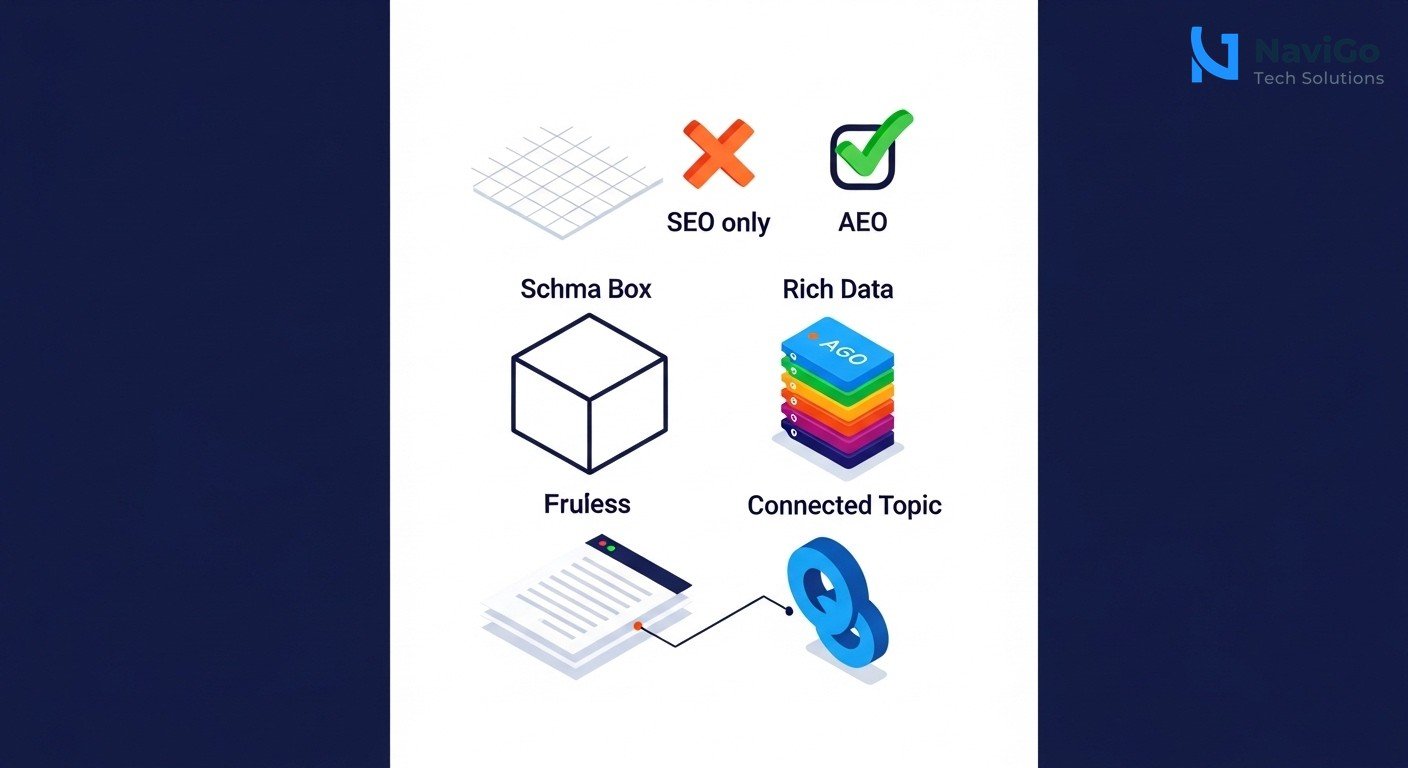
The shift from SEO to AEO is not optional. It is the only path to recovery. Here is a direct comparison of the two frameworks for Indian publishers.
| Factor | Traditional SEO | Answer Engine Optimization (AEO) |
|---|---|---|
| Primary goal | Rank in search results | Get cited in AI-generated answers |
| Key tactic | Keywords and backlinks | Schema markup and structured data |
| CTR from position one with AI Overview | 2.1% | 37% (when cited) |
| Schema dependency | Low | Critical (eight-tag stack mandatory) |
| Recovery timeframe | 6-12 months (uncertain) | 3-6 months (measurable citation share gains) |
| Tools needed | Ahrefs, SEMrush | Profound, Otterly.AI, AthenaHQ, Frase |
The data is clear. AEO is the only framework that delivers traffic recovery in 2026. Indian publishers who adopt this approach, fix their schema, set the right publishing cadence, and refresh content monthly will recover 25% to 35% of their pre-collapse traffic. Those who keep doing traditional SEO will continue losing ground. For a deeper look at how social media and search are merging, read our guide on Social Media SEO in 2026.
Not sure which tool fits your business?
Our team at NaviGo Tech Solutions will set it up for you — free 30-minute strategy call.