- Understand the difference between traditional keywords and semantic keywords
- Discover the four types of semantic keywords and how to use each one
- Get a repeatable five-step process to build topic clusters with HubSpot
- Learn common pitfalls in semantic SEO and how to avoid them
- What Are Semantic Keywords? A Plain Explanation for Indian Business Owners
- Why Semantic Keywords Matter More in 2026 for Indian SEO
- How to Find and Use Semantic Keywords: A Step-by-Step Process
- Common Mistakes Indian Businesses Make with Semantic SEO
- Best Tools for Semantic Keyword Research: A Comparison
What Are Semantic Keywords? A Plain Explanation for Indian Business Owners
Semantic keywords are words and phrases that are conceptually related to your main topic. They are not synonyms. They represent the natural vocabulary that an expert would use when discussing a subject. For example, if your main topic is “best restaurant in Chennai,” semantic keywords include “filter coffee,” “Chettinad cuisine,” “Marina Beach dining,” “Sunday brunch buffet,” and “family-friendly eatery.”
Traditional SEO focused on exact keyword matching. If someone searched “best restaurant in Chennai,” you needed that exact phrase repeated multiple times. Google now uses natural language processing, entity recognition, and vector embeddings to understand meaning. In 2026, the search engine does not just match strings. It understands concepts. A page that covers the topic comprehensively with related terms will outrank a page that just repeats the exact keyword.
There are four types of semantic keywords you need to know:
LSI Keywords are terms commonly found together in content about a topic. For a page on “digital marketing,” LSI terms include “social media,” “email campaigns,” “conversion rate,” and “content strategy.” These help search engines confirm your page is about the broader topic.
Entity-Based Keywords are named entities like people, places, brands, and things. For a Chennai business, entities might include “T Nagar,” “OMR,” “Chennai Central,” “Biryani,” and “Tidel Park.” Mentioning recognised entities builds authority and helps search engines connect your content to local knowledge graphs.
Intent-Based Keywords match the user’s goal behind a search. A query like “buy stainless steel cookware online” shows purchase intent. “How to clean a steel kadai” shows informational intent. Including both types of keywords in your content ensures you capture users at different stages of their journey.
Conversational Keywords are phrases people use when speaking naturally, often in voice searches or AI chat queries. Examples include “what is the best time to visit Ooty” or “where can I find authentic Kanchipuram silk sarees in Chennai.” These long-tail questions are increasingly common with voice assistants and AI tools like ChatGPT and Perplexity.
Understanding these four types helps you build content that demonstrates expertise. Google’s E-E-A-T framework rewards pages that show experience, expertise, authority, and trustworthiness. Semantic keywords are the building blocks of E-E-A-T because they prove you genuinely understand the subject.
Why Semantic Keywords Matter More in 2026 for Indian SEO
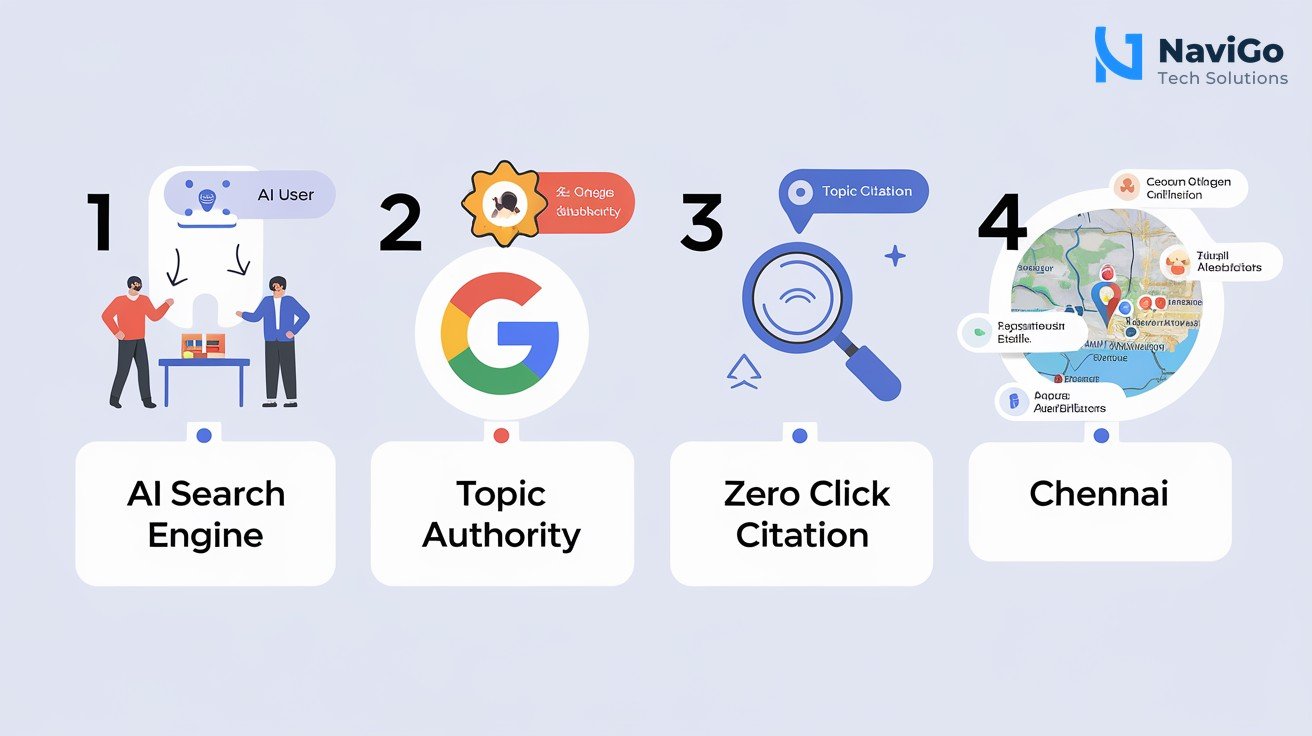
AI Search Engines Are the New Normal
Nearly two-thirds of buyers now start their search using generative AI tools like ChatGPT, Perplexity, and Google’s AI Overviews. In 2026, traditional search engines still hold 80.76% of desktop searches, but AI tools are growing fast. These AI systems rely on semantic understanding, not keyword density. If your content does not use natural related terms, AI tools will not cite you. Pages with FAQ blocks average 4.9 AI citations compared to 4.4 for pages without. Adding FAQ schema and conversational keywords directly improves your chances of being quoted in AI responses.
Google’s AI Updates Favour Topic Authority
Google’s latest AI updates, including the Gemini model, prioritise content that covers a topic comprehensively. An Ahrefs study found that pages ranking in the top three for competitive keywords average 2.5 times more semantically related terms than pages on page two. This is not about keyword stuffing. It is about natural coverage of related subtopics. For Indian businesses, this means a restaurant page that mentions “home delivery,” “catering services,” “birthday party packages,” and “pure vegetarian options” would rank higher than a page focused only on “best restaurant.”
Zero-Click Search Changes the Goal
Google AI Overviews now answer many queries directly on the search results page. The goal shifts from earning a click to earning a citation. To get cited, your content must provide clear, concise answers to specific questions. Using intent-based and conversational keywords in your headings, FAQ sections, and meta descriptions increases your chances of being featured. Question-based H1s average 4.6 AI citations versus 4.5 for non-question headings. Small changes like these compound into real visibility gains.
Local SEO in Chennai Requires Semantic Depth
For a business targeting Chennai customers, semantic keywords that include local entities, neighbourhood names, landmark references, and regional terms are essential. A page optimised for “digital marketing agency Chennai” should naturally include “Velachery,” “Anna Nagar,” “Tidel Park,” “startup ecosystem Chennai,” “SME marketing,” and “Tamil Nadu business growth.” These terms help Google connect your business to the local knowledge graph. Our Local SEO Guide Chennai covers this in more detail.
How to Find and Use Semantic Keywords: A Step-by-Step Process
Here is a repeatable process you can use with HubSpot or any keyword research tool to build a strong semantic keyword strategy.
Step 1: Start with a Pillar Topic
Choose a broad topic that is central to your business. For a Chennai digital marketing agency, your pillar topic might be “digital marketing for small businesses in India.” This is your pillar page, the comprehensive guide that covers the topic at a high level.
Step 2: Mine Google for Semantic Clues
Go to Google and search your pillar topic. Look at the “People Also Ask” box, “Related Searches” at the bottom, and the autocomplete suggestions as you type. Each of these is a goldmine of semantic keywords. For “digital marketing for small businesses,” PAA questions might include “how much does digital marketing cost for a small business in India?” and “which social media platform is best for Indian small businesses?” Note down at least 20 related queries.
Step 3: Analyse Top-Ranking Content
Open the top three pages ranking for your pillar topic. Use a tool like HubSpot’s SEO tool or a free Chrome extension to extract the key phrases they use. Look at their H2 and H3 headings, image alt text, and meta descriptions. Pages ranking in the top three use an average of 2.5 times more semantically related terms. Capture those terms, but do not copy them. Use them as inspiration for your own unique content.
Step 4: Cluster Keywords by Subtopics
Group your collected keywords into 10 to 15 clusters. Each cluster should represent a specific subtopic. For example, subtopics under “digital marketing for small businesses” might include “social media marketing for Indian SMEs,” “Google Ads for small budgets,” “email marketing for local businesses,” and “content marketing for service businesses.” Each subtopic becomes a cluster content page that links back to the pillar page. This is the topic cluster model that HubSpot recommends.
Step 5: Build Your Content Brief with Semantic Keywords
For each cluster page, create a content brief that includes the primary keyword, 10 to 15 semantic keywords, three to five entities to mention, two to three questions to answer, and suggested internal links. Best practice is 3 to 5 internal links per 1,000 words. Use the semantic keywords naturally in your H1, H2 headings, first 100 words, body paragraphs, image alt text, anchor text for internal links, and meta description. Keep your meta description under 160 characters. No single semantic term should appear more than 1.5 times per 100 words unless it is central to the topic.
If you need expert help implementing this strategy at scale, our SEO optimisation services are built for Indian businesses that want to rank in 2026.
Common Mistakes Indian Businesses Make with Semantic SEO
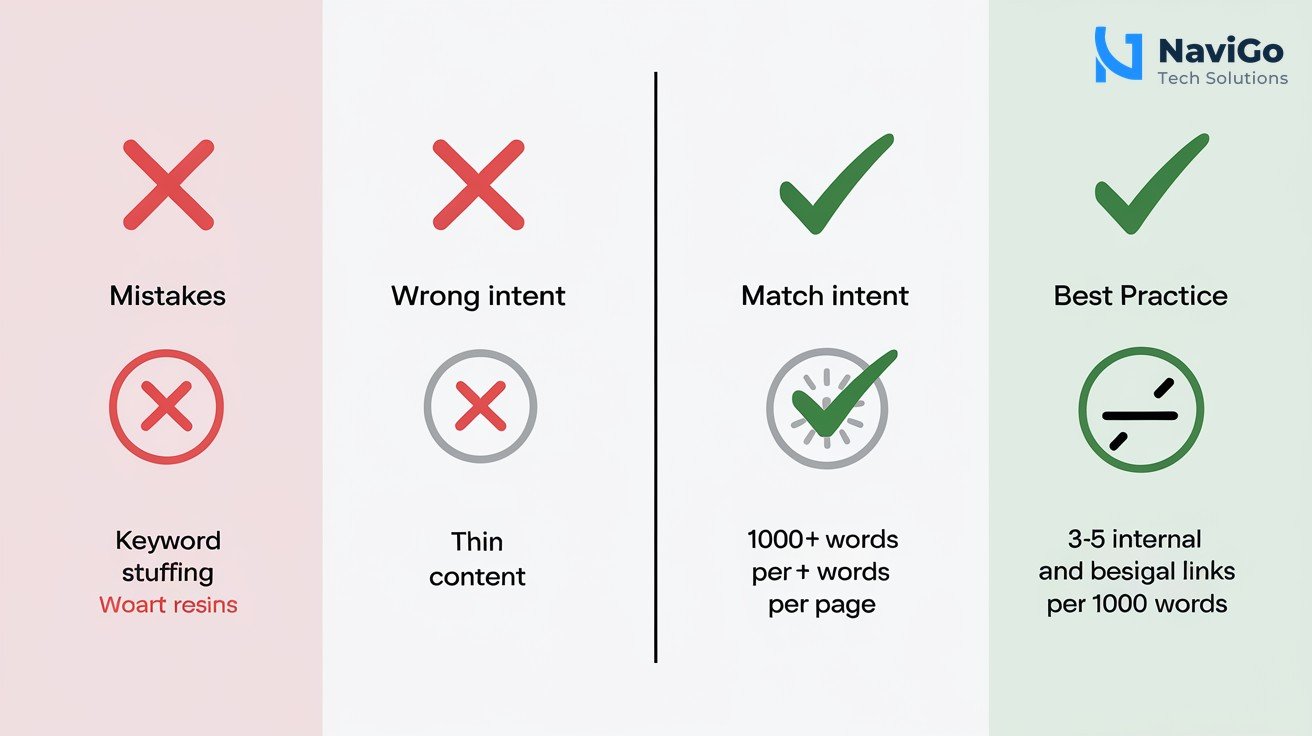
Mistake 1: Keyword Stuffing with Related Terms
Some marketers think semantic SEO means just adding more keywords. They list them in the footer, put them in hidden text, or force them into every paragraph. This is still keyword stuffing. Google’s NLP models can detect unnatural language. Write for humans first. If a term fits naturally, use it. If it feels forced, leave it out. A content coverage score above 80 from tools like Clearscope or Surfer SEO correlates with strong rankings, but that score should come from natural coverage, not forced placement.
Mistake 2: Ignoring Search Intent
A common error is targeting keywords without understanding what users actually want. If someone searches “best digital marketing agency Chennai,” they likely want a comparison list, pricing, and client reviews, not a 2000-word essay about the history of digital marketing. Match your content format to the intent. Informational queries need guides. Commercial queries need comparison tables or case studies. Transactional queries need clear calls to action. Misalignment between intent and content is a fast way to lose rankings.
Mistake 3: Creating Thin Cluster Content
Topic clusters only work if each cluster page is genuinely valuable. A 300-word page with a few semantic keywords thrown in is thin content. Each cluster page should be at least 1000 words, thoroughly answer the subtopic, include internal links to the pillar page and other relevant cluster pages, and use structured data like FAQ schema. Pages with FAQ blocks average 4.9 AI citations, so adding FAQ schema directly improves your visibility in AI responses.
Mistake 4: Forgetting Internal Links with Natural Anchor Text
Internal links are how topic clusters function. Many businesses create great content but forget to link them properly. Use descriptive anchor text that includes semantic keywords. For example, instead of “click here,” use “learn more about our social media marketing services for Chennai businesses.” Best practice is 3 to 5 internal links per 1000 words. Neglecting this is one of the biggest missed opportunities in semantic SEO.
Best Tools for Semantic Keyword Research: A Comparison
Choosing the right tool depends on your budget, team size, and how deep you want to go. Here is a comparison of five popular options, including HubSpot’s free tool and more advanced paid platforms. All figures are approximate for the Indian market as of 2026.
| Tool | Pricing (INR/Month) | Key Feature | Best For |
|---|---|---|---|
| HubSpot SEO Tool | Free with CRM | Topic clusters and content strategy | Small businesses starting out |
| Ahrefs | Rs. 8,000 + | Keyword gap and competitive analysis | Medium businesses scaling |
| Surfer SEO | Rs. 5,000 + | Content coverage scores | Content teams needing optimisation |
| SEMrush | Rs. 10,000 + | Comprehensive SEO toolkit | Agencies and larger teams |
| Google Keyword Planner | Free | Search volume and bid estimates | PPC and basic keyword research |
If you are a small business owner or marketer in Chennai, start with HubSpot’s free SEO tool to build your first topic cluster. As you grow, you can add Ahrefs or Surfer SEO for deeper analysis. For businesses that want a complete strategy executed by experts, our AI Ads and Automation services include semantic keyword research and content optimisation tailored to Indian audiences.
Not sure which tool fits your business?
Our team at NaviGo Tech Solutions will set it up for you — free 30-minute strategy call.