- What deepfake detection is and why it matters for Indian businesses
- How a retired professor lost Rs 61 lakh to a deepfake video scam
- Practical steps to verify content and protect your brand
- Which internal and external tools can detect deepfakes reliably
- How to train your team and avoid costly mistakes
- What Is Google Deepfake Detection and Why Does It Matter for Indian Businesses?
- Why Indian Businesses Must Pay Attention to Deepfakes Right Now
- How to Implement Deepfake Detection in Your Business: A Step-by-Step Guide
- Common Mistakes to Avoid When Dealing With Deepfakes
- Top Tools and Platforms for Deepfake Detection in 2026
What Is Google Deepfake Detection and Why Does It Matter for Indian Businesses?
Deepfake detection is technology that spots AI-generated fake content. This includes videos, audio recordings, and images that look real but are completely synthetic. Google’s deepfake detector uses advanced machine learning models to analyse subtle inconsistencies. For example, it checks for unnatural blinking, mismatched lip movements, and audio-visual sync errors that are hard for humans to notice.
For Indian business owners, this matters because deepfakes are no longer a distant threat. In 2025, a retired Bengaluru professor saw a deepfake video of Union Finance Minister Nirmala Sitharaman endorsing a fake investment platform called bxbmarket.com. The video looked realistic. He clicked the ad, shared his details, and eventually lost Rs 61.1 lakh. The scammers used Telegram chats, overseas calls from a UK number, and even fake KYC documents to appear legitimate.
Google’s tools are designed to catch such fabrications. They can be integrated into your content verification workflow, social media monitoring, and customer communication channels. If your business uses video ads, customer testimonials, or voice-based interactions, you need this layer of protection. Without it, you risk financial loss, reputational damage, and legal trouble under India’s proposed AI regulations.
In October 2025, India took its first shot at regulating AI with new guidelines. These rules require businesses to label AI-generated content and prevent misuse. The Google deepfake detector helps you comply with these rules while also protecting your customers. If you want to explore how AI can also benefit your marketing, check out our AI Digital Marketing services for safe, effective campaigns.
Why Indian Businesses Must Pay Attention to Deepfakes Right Now
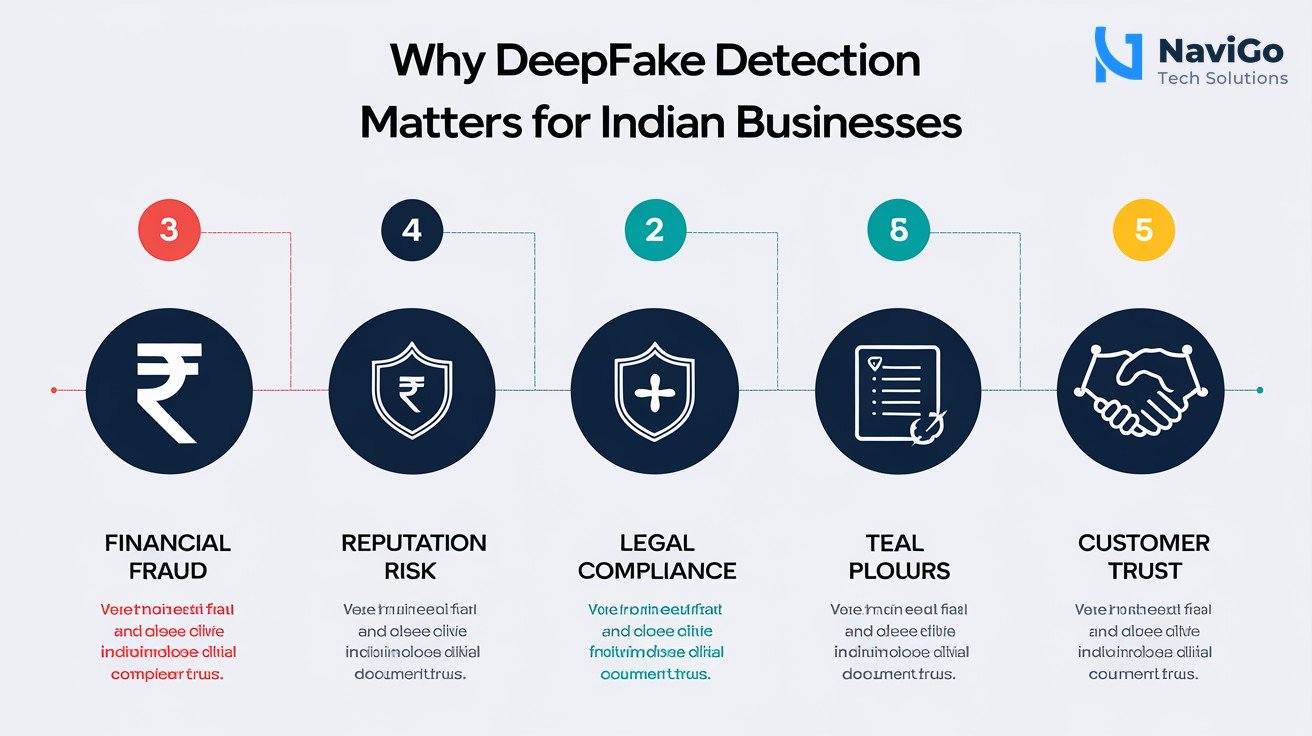
Deepfakes are not just a problem for big companies. Small and medium businesses in India are also targets. Scammers use deepfakes to impersonate business owners, fake customer testimonials, and create fraudulent ads that damage your brand. Here are the key reasons you should act now.
Financial fraud is growing rapidly
Deepfake audio cloning is now used to trick employees into transferring money. In one reported case, a CEO’s voice was cloned to instruct a finance team to send funds. According to 2026 statistics, AI voice cloning fraud has increased alarmingly. For Indian businesses, even a single incident can wipe out months of profit. The Bengaluru professor case shows that no one is immune. The scammers targeted him because he trusted a video featuring a known public figure.
Reputational risk for your brand
If a deepfake video of your business owner or product surfaces, it can spread faster than a real news article. Fake endorsements or fake customer complaints can destroy trust. For example, a competitor could create a deepfake of your CEO making false claims. Without detection tools, you might not even know it exists until it is too late. Google’s deepfake detector can scan social media and video platforms for your brand’s likeness.
Legal compliance is becoming mandatory
India’s proposed AI regulation includes mandatory labelling and detection requirements for AI-generated content used in commercial contexts. If your business uses AI-generated ads, voice assistants, or chatbots, you must ensure they are clearly identified. Failing to do so could lead to penalties. The Google deepfake detector can help you automate this compliance. For deeper insight into how Google is shaping AI in India, read our guide on Google AI Updates 2026.
Customer trust is your biggest asset
In a world where anyone can create a convincing fake video, your customers need to know they can trust your communications. If you send a video message or share a testimonial, they must be confident it is genuine. Using deepfake detection tools sends a clear signal that you take security seriously. This builds loyalty and sets you apart from competitors who ignore the risk.
How to Implement Deepfake Detection in Your Business: A Step-by-Step Guide
You do not need to be a tech expert to protect your business. Follow these practical steps to integrate deepfake detection into your daily operations.
- Step 1: Audit your current content channels. List all platforms where your business publishes videos, images, or audio. This includes your website, social media accounts, YouTube channel, and customer support calls. Identify which assets are most vulnerable to being faked.
- Step 2: Choose a detection tool. Google offers a deepfake detection API that can be integrated into your workflow. Alternatively, you can use browser-based tools or third-party platforms. Pick one that fits your budget and technical capability. Start with a free trial to test accuracy.
- Step 3: Set up scanning for public content. Enable the tool to scan all incoming user-generated content, such as customer reviews, testimonials, and comments. Also scan outgoing marketing materials before publishing. This catches fakes before they reach your audience.
- Step 4: Train your team on basic verification. Teach your employees how to spot common deepfake signs: unnatural eye movement, audio lag, strange lighting, and inconsistent skin tone. Combine human checks with automated tools for best results.
- Step 5: Create a response plan. If you detect a deepfake involving your brand, act fast. Take down the content, report it to the platform, and inform your customers. Keep a log for legal purposes. If funds are involved, contact the national cybercrime helpline at 1930 immediately.
For a complete security setup, consider integrating these steps with your AI Strategy Consulting to ensure every part of your business is covered.
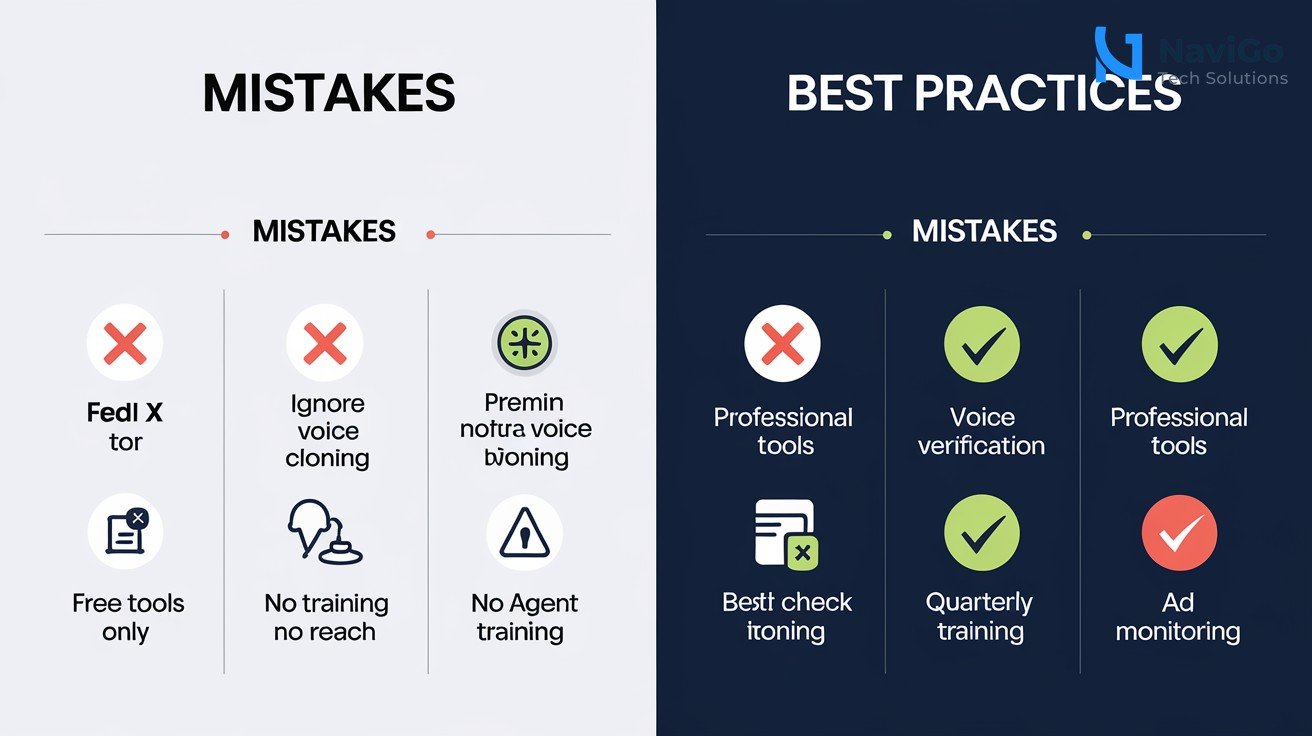
Common Mistakes to Avoid When Dealing With Deepfakes
Many Indian businesses make errors that leave them exposed. Here are the most common pitfalls and how to steer clear.
Mistake 1: Relying only on free tools
Free detection tools are often slow and less accurate. They may miss sophisticated deepfakes created with the latest AI models. Invest in a professional-grade solution like Google’s detector. The cost of a tool is far less than the loss from a single scam. For example, the Bengaluru professor’s loss of Rs 61 lakh could have been prevented with proper screening.
Mistake 2: Ignoring voice cloning threats
Many businesses focus on video deepfakes but forget about voice cloning. Scammers can clone your voice from a short phone call or a public video. Use voice authentication protocols for all financial transactions. Verify requests using a second channel, such as a callback to a known number. Never trust a voice request alone.
Mistake 3: Not training employees properly
Your team is your first line of defence. If they do not know what a deepfake looks like, they will fall for it. Run quarterly training sessions on new deepfake techniques. Share real Indian scam examples, like the Bengaluru professor case, so they understand the severity. Make reporting suspicious content easy and penalty-free.
Mistake 4: Overlooking social media ads
Deepfake ads are increasingly common on Facebook, Instagram, and YouTube. Scammers create fake celebrity endorsements to promote fraudulent schemes. Monitor your brand keywords and ad placements regularly. Use tools like Google’s brand safety controls to block suspicious content. For more on social media risks, read our Social Media SEO 2026 guide.
Top Tools and Platforms for Deepfake Detection in 2026
Several tools are available for Indian businesses. Here is a comparison of the most effective options based on accuracy, cost, and ease of use.
| Tool | Best For | Accuracy | Starting Price |
|---|---|---|---|
| Google Deepfake Detection API | Video and audio verification | High | Free tier available, then pay per use |
| Microsoft Video Authenticator | Corporate video content | High | Included with Enterprise license |
| HONOR Deepfake Detection (Mobile) | Real-time phone scanning | Medium-High | Free on compatible devices |
| Sensity AI | Social media monitoring | Medium | Custom pricing |
| Deepware Scanner | Quick web-based checks | Medium | Free for basic use |
| Intel FakeCatcher | Real-time live video | Medium-High | Varies by deployment |
Choose a tool that matches your volume of content and technical resources. For most Indian small businesses, starting with Google’s free tier and upgrading as needed is a smart approach. Pair it with regular employee training and a clear response plan. For complete digital protection, consider our AI Agents and Bots that can automate detection and alert you instantly.
Not sure which tool fits your business?
Our team at NaviGo Tech Solutions will set it up for you — free 30-minute strategy call.