
- How AI agents are reshaping customer journeys from discovery to decision
- The difference between traditional SEO and answer engine optimisation (GEO)
- Practical steps to make your content visible to AI agents
- Why Indian brands are already shifting to AI-first digital marketing
What Are AI Agents and How Do They Affect SEO?
An AI agent is a software program that can perform tasks on its own. It uses artificial intelligence to understand user intent, gather information, and take action. For example, a customer might ask an AI agent: “Find me a good laptop under Rs 50,000 with 16GB RAM.” The agent then searches the web, compares products, reads reviews, and returns a recommendation. It does not just list links - it creates an answer.
This shift changes how search works. Traditional SEO focused on ranking high in Google search results. But AI agents pull information from many sources, not just search engines. They look at structured data, reviews, forums, and authoritative articles. If your content is not written in a way AI agents can understand, your brand simply will not appear in their recommendations. For Indian brands, this is a major opportunity because early adopters can gain visibility before competition gets tight.
Leading agencies in India are already training their teams in AI-first approaches. For instance, Techmagnate, a top SEO agency, announced structured workforce training in AI methods in early 2026. Similarly, Scale Sense launched an AI-first growth model specifically for Indian brands. This shows that the industry is moving fast. If you wait, you will fall behind.
At NaviGo Tech Solutions, we help businesses adapt to these changes through our AI Agents and Bots services. We build systems that make your brand discoverable by AI agents and also assist you in creating content that ranks in both traditional and AI-driven search environments.
Why AI Agents Matter for Indian Brands in 2026
2.1 From Discovery to Decision Happens Inside AI Agents
A recent report by ET BrandEquity explained how AI is reshaping the entire customer path. In 2026, many buyers no longer visit a brand website first. Instead, they begin their journey by asking an AI assistant. The agent does the research, compares options, and even shares a shortlist. For Indian consumers, especially in metro cities like Chennai, this behaviour is rising quickly. If your business is not listed in these agents’ responses, you lose the sale before the customer even knows you exist.
2.2 GEO is Becoming More Important Than Traditional SEO
GEO stands for Generative Engine Optimisation. It is the practice of optimising content so that AI-powered answer engines (like ChatGPT, Gemini, or Perplexity) pick it up. According to Agency Reporter, many Indian B2B brands are now turning to GEO because traditional SEO alone no longer guarantees visibility. The key difference is that GEO focuses on question-and-answer formats, structured data, and authoritative citations. If you only optimise for Google, you may be invisible to AI agents.
2.3 AI Citations Are the New Backlinks
In traditional SEO, backlinks from reputable sites were the gold standard. Now, AI agents look for citations from trusted sources. BrandStory, a leading SEO agency in Bangalore, shared insights on how AI citations work. An AI agent may cite an article from a news site, a government report, or an expert blog. If your brand is mentioned in these citations, it gains authority. This is especially important for Indian small businesses that may not have a massive backlink profile but can earn mentions by contributing useful content to trusted platforms.
2.4 Agentic AI is Now a Brand Mandate
Ashok Deepan, a digital marketing expert, stated in Business Standard that agentic AI is no longer optional for brands. It is a mandate. This means you must have systems in place that allow AI agents to interact with your content and even take actions like booking appointments or answering queries. NaviGo Tech Solutions offers AI digital marketing strategies that include agentic integration. We help brands build the infrastructure needed to be AI-ready.
How to Optimise Your Content for AI Agents: A Step-by-Step Guide
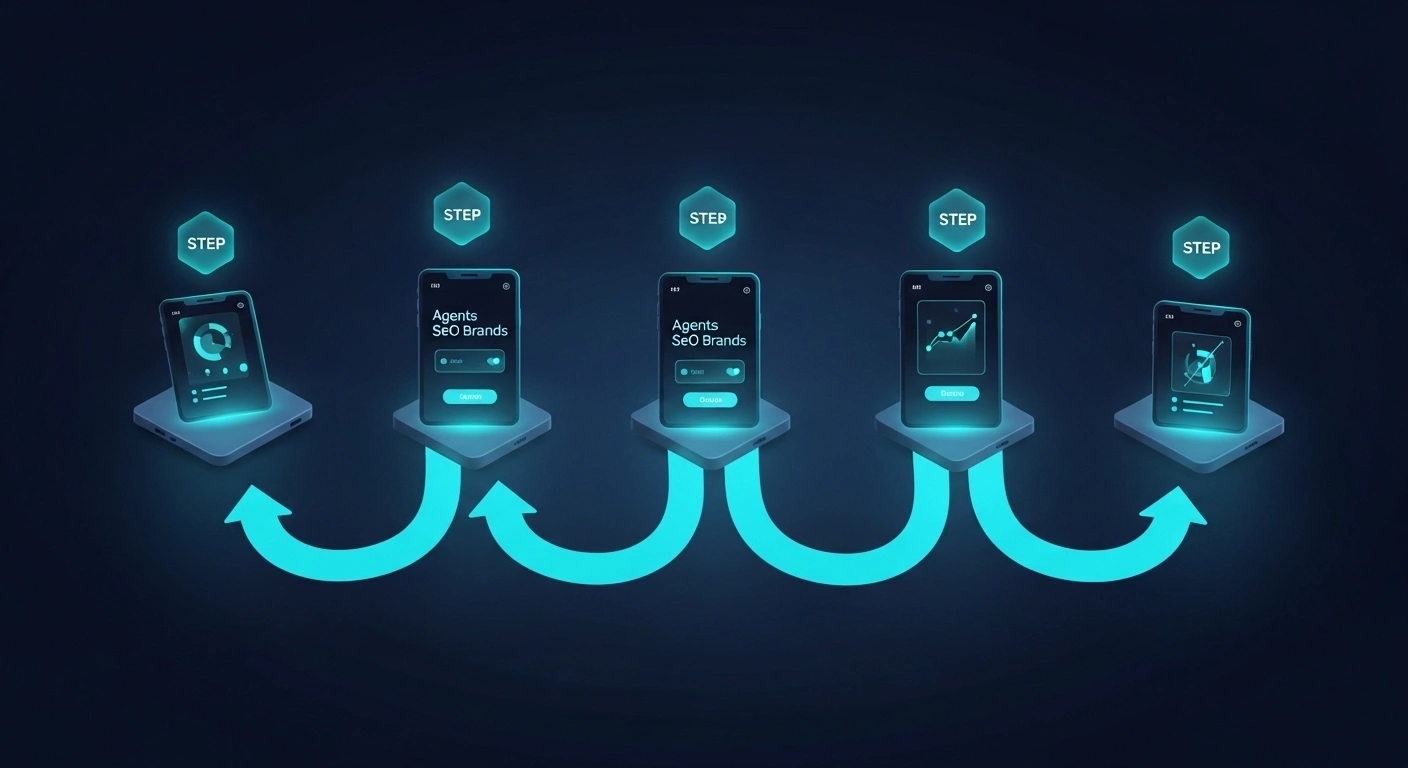
- Step 1: Create content in a question-and-answer format. AI agents love clear answers to specific questions. Instead of writing a generic article about laptops, write a piece titled “Which Laptop Under Rs 50,000 Has 16GB RAM?” Use bullet points, tables, and short paragraphs. This makes it easy for an AI agent to extract the exact information a user needs.
- Step 2: Add structured data (schema markup) to your website. Schema tells AI agents what your content means. For example, use “HowTo” schema for tutorials, “FAQ” schema for question pages, and “Product” schema for e-commerce listings. Without schema, AI agents may miss your content entirely. Our SEO optimisation services include implementing the right schema for your business.
- Step 3: Build citations on authoritative platforms. Get your brand mentioned in news articles, industry blogs, and government directories. AI agents trust these sources. You can also contribute guest posts or expert quotes to sites that are frequently cited by AI agents. This builds your digital authority without needing hundreds of backlinks.
- Step 4: Optimise for featured snippets and Google AI Overviews. Even though AI agents are changing search, traditional search still matters. Google’s AI Overviews often pull from the same content that AI agents use. Focus on getting your content into position zero - the snippet that appears above the search results. This increases your chances of being picked by both Google and AI agents.
- Step 5: Monitor your brand’s AI visibility. Use tools that check how your brand appears in AI agent responses. Ask common questions about your product or service to ChatGPT, Gemini, and other AI tools. If you are not mentioned, adjust your content strategy. Regular monitoring helps you stay ahead as AI agents update their models.
Common Mistakes Indian Brands Make When Optimising for AI Agents
4.1 Writing Only for Humans, Not for Machines
Many Indian businesses still write long, flowery paragraphs that are hard to parse. AI agents need concise, factual, and structured content. If your about page has a story but no clear answer about what you offer, an AI agent will skip it. Instead, write clear sentences. Use headers, lists, and tables. Think of it as writing for a busy reader who wants the answer in 10 seconds. Check out our Local SEO guide for Chennai to see how we structure content for both readers and AI.
4.2 Ignoring Structured Data and Schema
Schema markup is the language AI agents understand. Without it, even the best content can be invisible. Many Indian small business websites lack even basic schema. This is a critical mistake. Make sure your site has LocalBusiness schema, FAQ schema, and Product schema where relevant. It takes a few hours to set up but pays off in AI visibility.
4.3 Not Claiming Business Listings on AI-Friendly Platforms
AI agents often pull data from Google Business Profile, Justdial, and other directories. If your business information is incomplete or inconsistent, AI agents may show wrong details. Claim your listings, update your hours, and keep everything consistent. This simple step ensures AI agents have accurate information to share with users.
4.4 Focusing Only on Google Rankings
Some brands still obsess over ranking number one on Google. But in 2026, many users never see a search result page. They get answers directly from AI agents. If your content is optimised only for Google’s algorithm, it may not work for AI agents. Shift your strategy to be platform-agnostic. Write content that works for all search environments.
AI Agent Optimisation vs Traditional SEO: A Comparison
To understand the difference clearly, here is a comparison table that shows key aspects of each approach. Indian brands need to invest in both, but the balance is shifting toward AI agent optimisation.
| Aspect | Traditional SEO | AI Agent Optimisation | What Indian Brands Should Do |
|---|---|---|---|
| Target audience | Search engine users | AI agents and chatbots | Create content for both |
| Primary rank factor | Backlinks and domain authority | Citations and structured data | Build citations and use schema |
| Content format | Articles and blog posts | Q&A, lists, tables, short answers | Use multiple formats |
| User behaviour | Click through to website | Get answer inside the agent | Make your offer clear in the snippet |
| Key strategy | Keyword stuffing and link building | Authority building and data structuring | Focus on being cited by trusted sources |
| Tools needed | Ahrefs, SEMrush, Google Search Console | Schema generators, AI monitoring tools | Use both sets of tools |
As you can see, the two approaches complement each other. For a complete strategy, you need to invest in both. Our Google AI updates 2026 blog post explains more about how Google is integrating AI into its own search results. Understanding these changes helps you prepare for every type of search.