- The exact nature of the Google SERP layout change as confirmed by Search Engine Journal in May 2026
- Why traditional SEO no longer guarantees visibility even for top ranks
- A 5-step action plan tailored for Indian businesses to adapt quickly
- Common pitfalls that waste your budget and how to avoid them
What Is the Google SERP Layout Shift
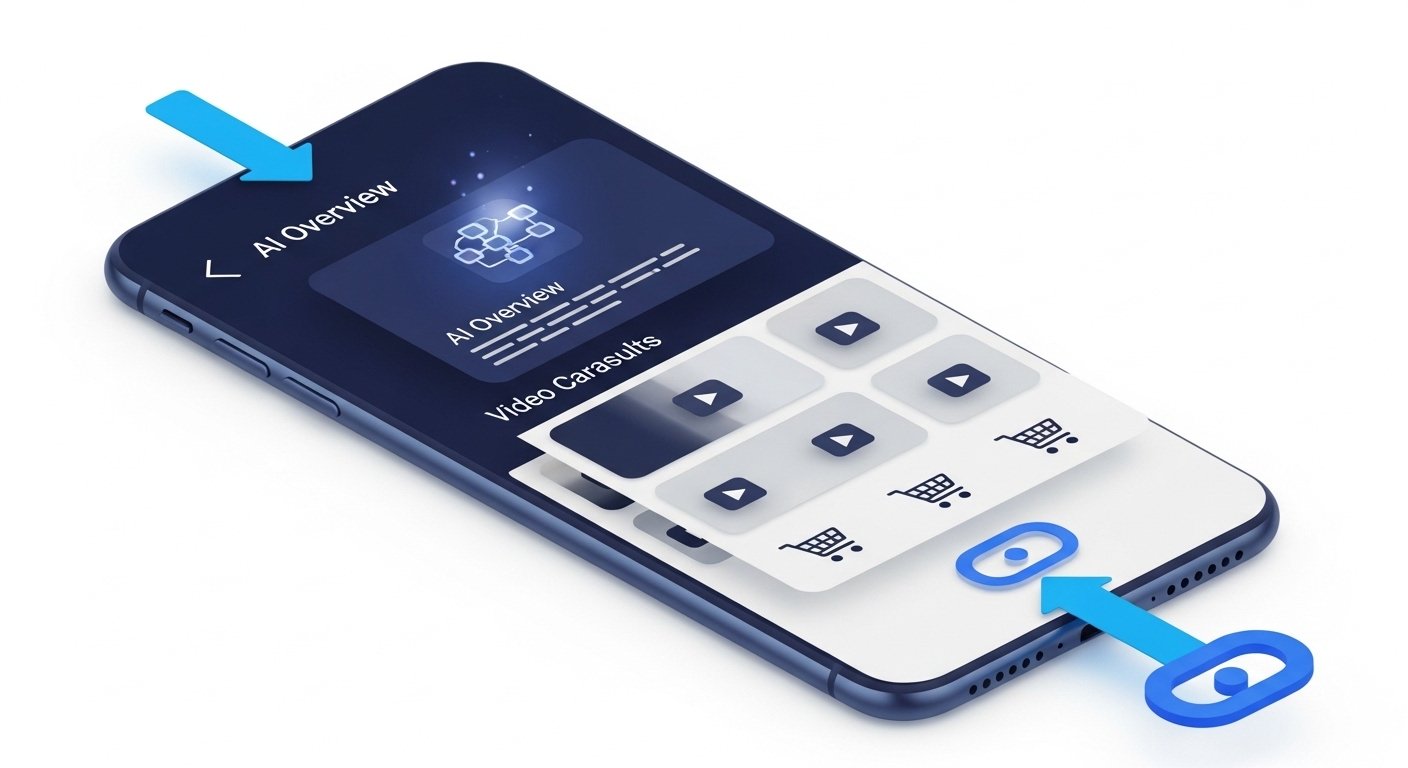
In May 2026, Search Engine Journal confirmed a major change to Google’s search results page layout. The first organic result now appears roughly halfway down the page instead of at the top. This is not a bug or a rumour. Google has officially redesigned the SERP to prioritise AI-generated overviews, video carousels, shopping units, and knowledge panels above traditional blue links.
For a small business in Chennai that relied on ranking number one for a local keyword like “best bakery in T Nagar,” this means your carefully earned top spot may not even be visible without scrolling. The Times of India recently reported that Google itself declared it is no longer a search company. It is now an AI-first information platform. This shift is permanent and will only deepen.
What does this mean for you? Simply put, getting to position one is no longer enough. You need to show up in multiple formats across the SERP to capture attention before the user has to scroll. Indian businesses that ignore this change will see their traffic drop significantly as more and more searchers never reach the traditional organic results.
As McKinsey noted in October 2025, AI search is the new front door to the internet. Your business needs to be visible at that front door, not hidden behind it.
Why This Shift Matters for Your Business in 2026
Organic Traffic Is No Longer Guaranteed by Ranking
Even if you rank number one for a high-volume keyword, your click-through rate can drop by 50 percent or more because the user has to scroll past AI overviews, ads, and videos to find your link. Forbes reported in 2025 that website statistics show user attention spans continue to shrink. If your link is not in the first visible block, most users will never see it.
AI Overviews Steal the Spotlight
Google’s AI-generated summaries now appear at the very top. These overviews pull information from multiple sources and often answer the user’s question directly. If your content is not featured within these AI overviews, you lose the chance to be the first answer. For Indian businesses, this means your product pages, service descriptions, and blog posts must be structured to feed into these AI summaries.
Local Search Is Disrupted Too
Local packs still appear but are pushed further down. A search for “plumber in Chennai” now shows a map pack after several ad units and an AI overview. Your Google Business Profile alone is not enough anymore. You need a stronger digital presence that includes video, reviews, and structured data to appear in multiple SERP features simultaneously.
Voice and Visual Search Play a Bigger Role
With AI becoming more integrated, voice search and image-based search are growing rapidly. According to McKinsey’s 2025 report on AI empowerment, more users are interacting with search through conversational interfaces. Indian businesses must optimise for long-tail conversational queries and ensure images are properly tagged.
5 Steps Indian Businesses Must Take Right Now
- Step 1: Create structured content for AI overviews. Write concise, fact-driven answers to common customer questions. Use bullet points, numbered lists, and clear definitions. Google’s AI prefers content that is easy to parse. For example, a Chennai restaurant should publish a page titled “What is the best biryani in Chennai?” with a direct 50-word answer followed by details.
- Step 2: Diversify beyond text. Add video, images, and infographics to every important page. Video carousels are now a top SERP feature. A short explainer video about your service can appear above your website link. Upload these to your own site and YouTube with proper schema markup.
- Step 3: Optimise for multiple SERP features. Target Google’s AI overviews, video snippets, and local packs simultaneously. Use FAQ schema, HowTo schema, and Product schema. For example, a boutique in Chennai can use Product schema on each item page and FAQ schema on the shipping policy page.
- Step 4: Build topical authority, not just keywords. Google now rewards websites that cover a topic comprehensively. Instead of targeting “digital marketing agency Chennai” with one page, create a cluster of 10 to 15 interlinked pages covering related subtopics like content marketing, SEO, social media ads, and AI automation.
- Step 5: Monitor and adapt monthly. SERP layouts change frequently. Use tools to track where your pages appear and which SERP features are dominating your keywords. Adjust your content strategy based on real data. This is where a professional SEO optimization service can save you months of trial and error.
Common Mistakes That Kill Your Chances
Mistake 1: Only Optimising for Traditional Links
Many Indian agencies still focus solely on getting backlinks and keyword density. In the new SERP landscape, that is not enough. If you do not have schema markup, video content, and structured data, you will not appear in AI overviews or carousels. Your ranking for the keyword may be high, but your visibility will be low.
Mistake 2: Ignoring User Intent Signals
Google now uses AI to understand what the user really wants. If your content matches the search intent poorly, you will be pushed down. For example, if someone searches “how to start a small business in India” and your page is just a sales pitch for your service, it will not rank well. Create content that answers the question first and sells second. Our Social Media SEO 2026 guide explains how user intent is reshaping search across platforms.
Mistake 3: Neglecting Mobile Optimisation
More than 80 percent of Indian users search on mobile. If your site loads slowly or looks bad on a phone, Google will penalise you. The new SERP layout means users are already scrolling more. A slow mobile experience will make them bounce immediately. Use Google’s PageSpeed Insights and fix Core Web Vitals.
Mistake 4: Relying on Old SEO Tactics Alone
Keyword stuffing, low-quality link building, and duplicate content no longer work. Google’s AI is too advanced. Focus on E-E-A-T (Experience, Expertise, Authoritativeness, Trustworthiness). Publish original research, customer case studies, and expert interviews. This builds the authority needed to be featured in AI overviews.
Comparison: Old SEO vs 2026 SERP-Ready Strategy
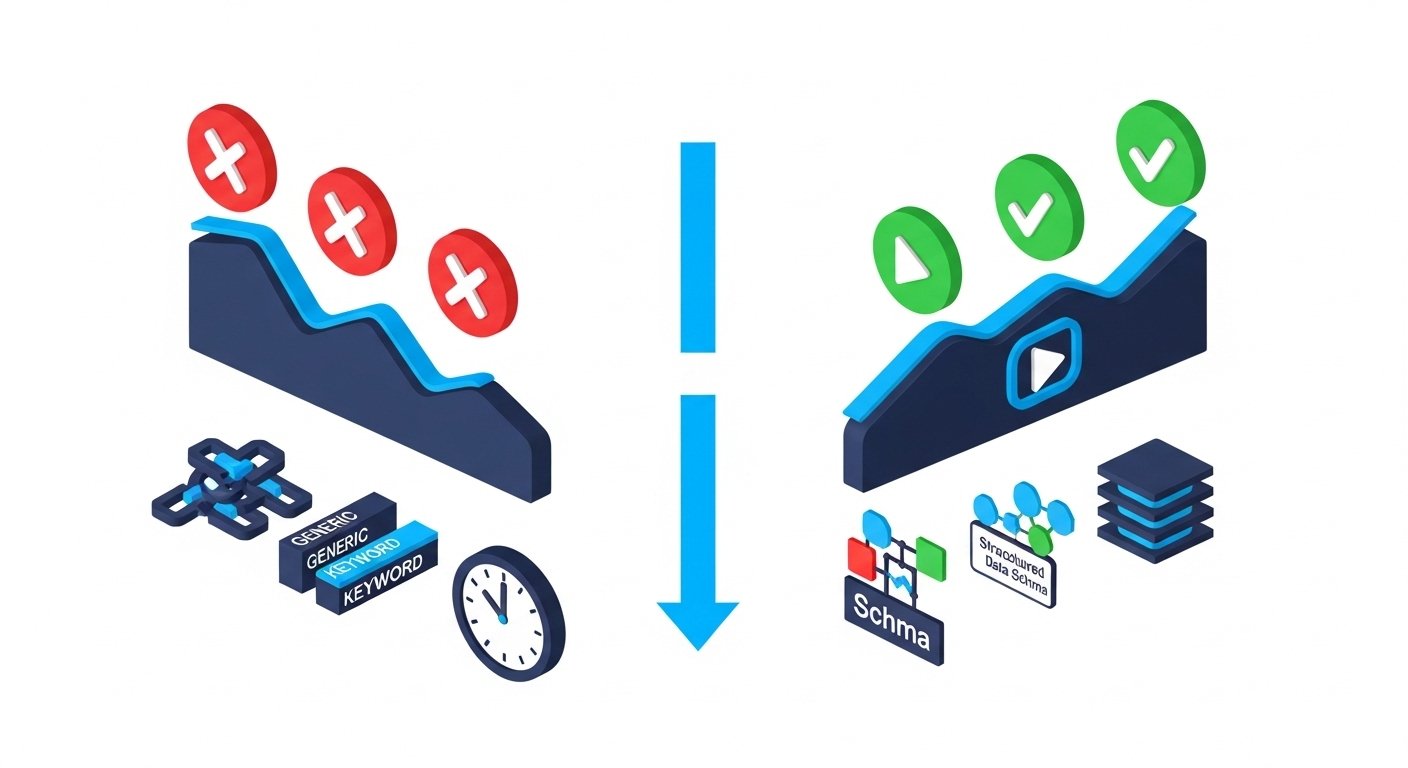
To help you see the difference clearly, here is a side-by-side comparison of what worked before the layout shift and what works now. Use this as a checklist to audit your own digital presence.
| Aspect | Old SEO Strategy | 2026 SERP-Ready Strategy | Why It Matters |
|---|---|---|---|
| Keyword focus | Single primary keyword | Topic clusters with semantic variations | AI overviews pull from topic depth |
| Content format | Text blog posts | Text + video + infographics | Video carousels appear above organic links |
| Technical SEO | Basic meta tags and alt text | Structured data (FAQ, HowTo, Product, Video) | Schema triggers rich SERP features |
| Link building | Quantity over quality | Authority links from real sources | Google’s AI trusts expert content |
| User intent | Match keyword exactly | Match the search goal behind the keyword | AI evaluates whether page satisfies intent |
| Local SEO | Google Business Profile only | GBP + local content + local schema + reviews | Local packs compete with AI overviews |
If you are unsure where to start, consider working with a team that understands both the technical and creative sides of modern SEO. At NaviGo Tech Solutions, we help Chennai businesses adapt to these changes. Our Local SEO guide for Chennai offers deeper insights into ranking in your local market.
Not sure which tool fits your business?
Our team at NaviGo Tech Solutions will set it up for you — free 30-minute strategy call.