- How the June 2026 spam update differs from previous updates
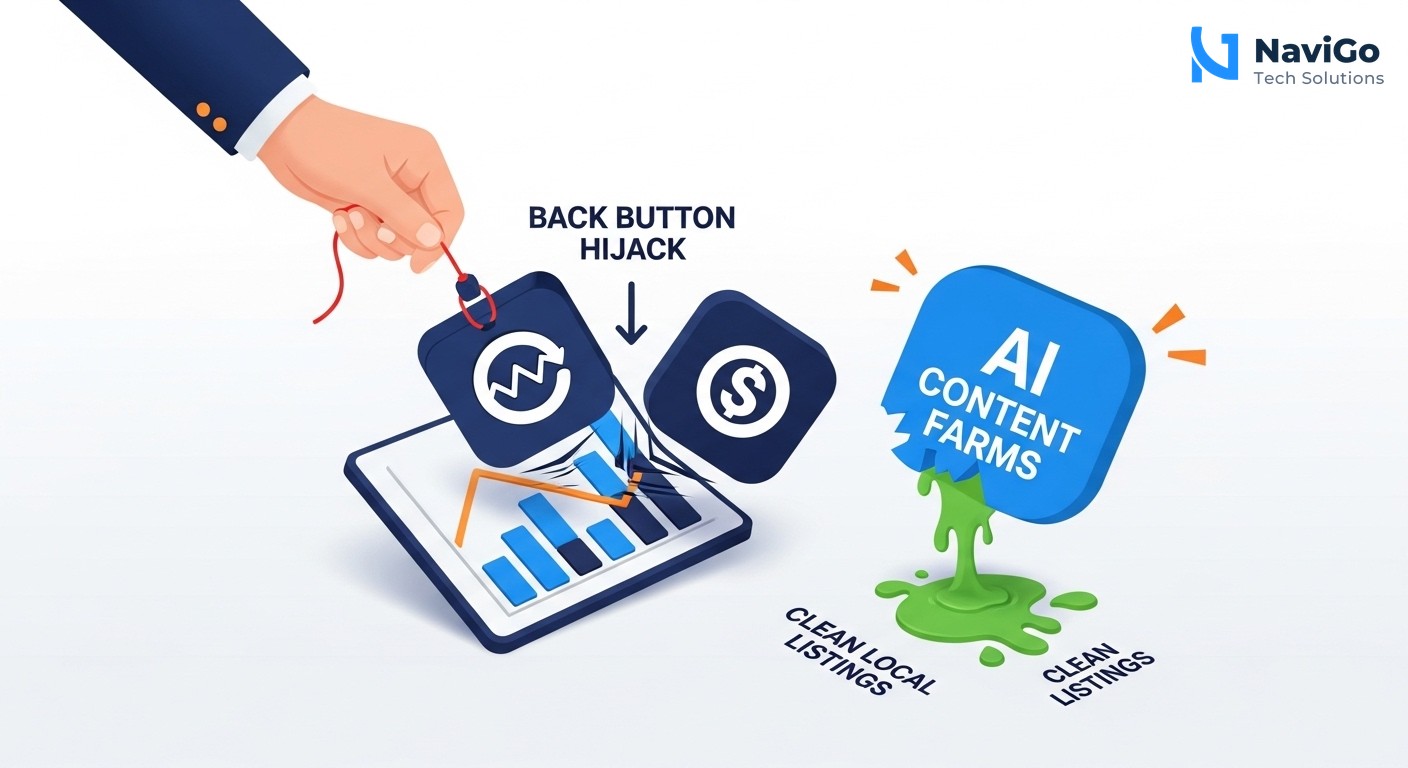
- What back button hijacking is and why Google is penalising it
- How AI-generated content farms are being targeted
- A 5-step checklist to audit and protect your website
What Is the Google June 2026 Spam Update?
Google announced the June 2026 spam update on 24 June through its official channels and on Search Engine Roundtable. This is a broad algorithm update that targets several types of spammy behaviour across the web. Unlike smaller updates that focus on one area, this one is designed to catch multiple violations at once.
The main areas of focus include back button hijacking, where a website tricks users into staying on a page when they try to leave, and low-quality AI-generated content that offers no real value. Google also confirmed that it is getting better at detecting manipulative link schemes and cloaking techniques that show different content to search engines versus real users.
For Indian businesses, this update is especially important because many small and medium enterprises rely on SEO to attract local customers. If your website uses any of these tactics, even unintentionally, you could lose visibility overnight. The good news is that a clean, user-focused website will not be affected.
If you are unsure about your current site health, consider working with a professional team. Our SEO Optimization services at NaviGo Tech Solutions can help you audit and fix any issues before the update fully rolls out.
Why It Matters for Indian Businesses
Back Button Hijacking Is Now a Serious Risk
In April 2026, Google announced it would start penalising websites that hijack the back button. This happens when a website redirects a user to an unwanted page or shows a popup that blocks navigation. If your site does this, even via a legitimate plugin, you risk a manual action penalty.
AI-Generated Content Farms Are Under Fire
Google’s AI detection systems have become much more sophisticated. Websites that publish large volumes of AI-written articles purely for search rankings are being downgraded. For Indian businesses, this means using AI tools to rewrite content without human review is no longer safe.
Local Search Results Are Getting Cleaner
Google is also cleaning up local search results by removing fake listings and duplicate business profiles. If you manage a Google Business Profile, you need to ensure your information is accurate, verified, and consistent across all platforms.
User Experience Signals Are More Important Than Ever
This update reinforces that Google prioritises websites that provide a fast, clear, and honest user experience. Slow loading times, intrusive ads, and confusing navigation can all contribute to ranking drops.
5 Steps to Protect Your Website Today
You do not need to panic. Follow these practical steps to make sure your website meets Google’s updated guidelines.
- Step 1: Check for back button hijacking. Use a browser testing tool or simply browse your site on mobile. Click the back button at least five times on different pages. If you are ever redirected or trapped, remove the plugin or code causing it.
- Step 2: Audit your AI-generated content. Review all pages created with AI tools in the last 12 months. Add human insight, data, and original advice. Google wants content that helps real people, not just search engines.
- Step 3: Verify your Google Business Profile. Go to your Google Business Profile and check that your name, address, phone number, and hours are correct. Remove any duplicate or outdated listings.
- Step 4: Remove low-quality pages. Delete or improve any thin content pages that offer little value. This includes old blog posts with very few words, product pages with no descriptions, and tag pages that duplicate other content.
- Step 5: Improve page speed and mobile friendliness. Use Google’s PageSpeed Insights to test your site. Optimise images, enable caching, and remove unnecessary scripts. A faster site keeps users happy and improves rankings.
Common Mistakes That Trigger Penalties
Using Aggressive Popups on Mobile
Many Indian websites use full-screen popups for newsletters or offers. If these popups block the main content or appear immediately, Google may treat them as intrusive. Always allow users to close popups easily.
Buying Cheap Backlinks from Fiverr or Similar Sites
Low-quality link building is a major red flag. Google’s spam update can detect unnatural link patterns. Focus on earning links through guest posts on reputable Indian websites and local business directories instead.
Cloaking or Showing Different Content to Google
Some sites show text to Google bots but display images or videos to users. This is a direct violation. Always serve the same content to everyone. If you are unsure how your site works, check with a developer or read our guide on Local SEO for Chennai businesses.
Ignoring User Feedback About Navigation
If users complain that your site is hard to navigate or that ads are too aggressive, listen. Google now uses real user interaction data in its rankings. A bad user experience can hurt your visibility.
Tools and Resources to Stay Compliant
You do not need to do everything manually. Use these tools to check your website regularly and catch problems early. Many are free or have Indian pricing tiers.
Here is a comparison of useful tools to help you audit your site for spam update compliance.
| Tool | Purpose | Cost | Best For |
|---|---|---|---|
| Google Search Console | Monitor penalties, indexing issues | Free | All websites |
| PageSpeed Insights | Check loading speed and mobile usability | Free | Speed optimisation |
| Screaming Frog | Crawl your site for broken links and thin content | Free up to 500 pages | Technical audits |
| Ahrefs | Analyse backlinks and detect spam | Paid (monthly or annual) | Link profile audits |
| SEMrush | Track rankings and site health | Paid (monthly) | Ongoing SEO monitoring |
| Sitebulb | Deep website audit with visual reports | Paid (one-time or subscription) | Comprehensive audits |
For a complete hands-off solution, consider working with experts. Our team at NaviGo Tech Solutions offers AI Strategy Consulting to help you adapt to Google’s updates while growing your business online.
Not sure which tool fits your business?
Our team at NaviGo Tech Solutions will set it up for you — free 30-minute strategy call.