- Visual search turns photos into queries, reducing the need for text-based searches.
- Google Lens now handles billions of visual searches every month, including millions from India.
- Optimising product images and local photos is essential for rankings.
- AI-driven visual ads offer new ways to reach Indian shoppers directly.
What Is Visual Search? A Simple Explanation
Visual search lets users search using images instead of text. You take a photo of a product, a landmark or a piece of clothing, and Google finds matching results. Google Lens, Google Images and similar features are the main tools for visual search. For Indian users, this is not a futuristic concept. It is already part of daily life.
Imagine a customer in Chennai sees a traditional Kanchipuram silk saree in a friend’s photo. They open Google Lens, point their phone at the screen, and instantly find shops nearby that sell similar sarees. The customer does not type a single word. Visual search removes friction and makes discovery instant.
Google has invested heavily in this technology. The company recently celebrated 25 years of visual search, announcing that Google Images is becoming a discovery hub with AI-powered features. Google Ads VP Dan Taylor confirmed that AI is changing how people search and helping businesses reach more customers. Reports from India Today suggest that Google Search may eventually stop showing blue links entirely, moving toward visual and conversational results.
This shift matters for Indian businesses. If your products and services do not have high-quality images with proper tags and descriptions, you risk being invisible in visual search results. The competition for visual visibility is already fierce, and it will only grow.
Why Visual Search Matters for Indian Businesses in 2026
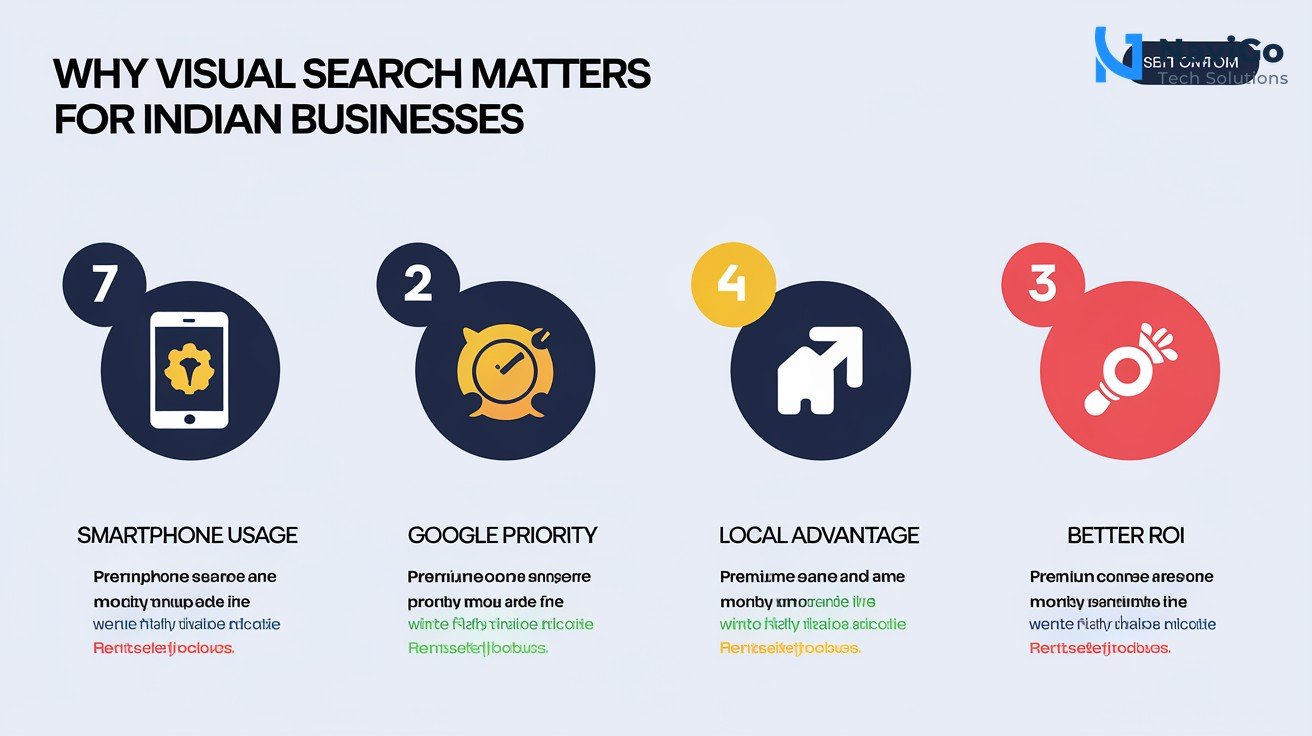
Indian Consumers Prefer Visual Discovery
India has one of the highest rates of smartphone usage and mobile internet consumption in the world. Services like Google Lens are popular because they are intuitive and fast. A customer in Chennai can scan a product in a store, compare prices online, and read reviews without switching apps. Visual search reduces the steps between discovery and purchase. For business owners, this means your product images must appear in search results for shoppers who never type a brand name.
Google Is Prioritising Visual Features
Google’s 25th anniversary of visual search is not just a milestone. It signals a strategic shift. The company is turning Google Images into a visual discovery platform similar to Pinterest, complete with AI-generated content. Google is also integrating conversational AI into search ads. This means visual search will interact with AI to provide richer results. According to The Economic Times, Google is betting on conversational AI to drive the next phase of search advertising. Indian businesses that adapt early will benefit from lower ad costs and higher relevance.
Local Businesses Gain a Big Advantage
Visual search is particularly powerful for local businesses. A restaurant in T. Nagar, Chennai can be found by a user who snaps a photo of a dish they like. A jewellery shop off Mount Road can appear when someone photographs a necklace design. Visual search connects intent directly to location. Our local SEO guide for Chennai explains how to combine visual search with local optimisation for maximum impact.
Visual Ads Offer Better ROI
AI-powered visual ads allow businesses to target users based on what they see, not just what they type. Google’s AI can now generate ad creatives that match the visual context of a search. For example, if a user searches for “blue silk saree” using an image, an AI-generated ad for your Chennai store can appear immediately. This reduces wasted spend and increases conversion rates.
Step-by-Step Guide to Optimise for Visual Search
Step 1: Use High-Quality Original Images
Blurry, low-resolution or stock images will not perform well in visual search. Use original photos of your products, storefront, menu items or services. Ensure images are at least 1200 pixels wide on the shortest side. For e-commerce products, use white backgrounds and multiple angles. Proper lighting and clarity are non-negotiable.
Step 2: Add Descriptive Alt Text to Every Image
Alt text is the primary way search engines understand what an image contains. Write concise, descriptive alt text that includes relevant keywords naturally. For example, instead of “saree-image.jpg”, use “blue kanchipuram silk saree with gold zari chennai”. Do not stuff keywords. Keep it accurate and helpful.
Step 3: Use Structured Data (Schema Markup)
Add product schema, image schema and local business schema to your website. This helps Google connect your images to entity information. For local businesses in Chennai, include your address, phone number and business type in the schema. Google uses this data to display rich results in visual searches.
Step 4: Create Image Sitemaps and Submit Them
An image sitemap tells Google exactly which images on your site should be indexed. Include captions, titles and geolocation data if possible. Submit the sitemap through Google Search Console. This ensures your products appear in image search results for users across India.
Step 5: Optimise for Google Lens and Similar Tools
Google Lens scans images and matches them to indexed content. To improve Lens visibility, make sure your images are publicly accessible and not blocked by robots.txt. Use descriptive file names. Include visible text in images where relevant, such as product names or prices. Visual search algorithms also consider page context, so surround your images with relevant content. Our guide on social media SEO explains how to leverage visual platforms beyond Google.
Common Mistakes to Avoid
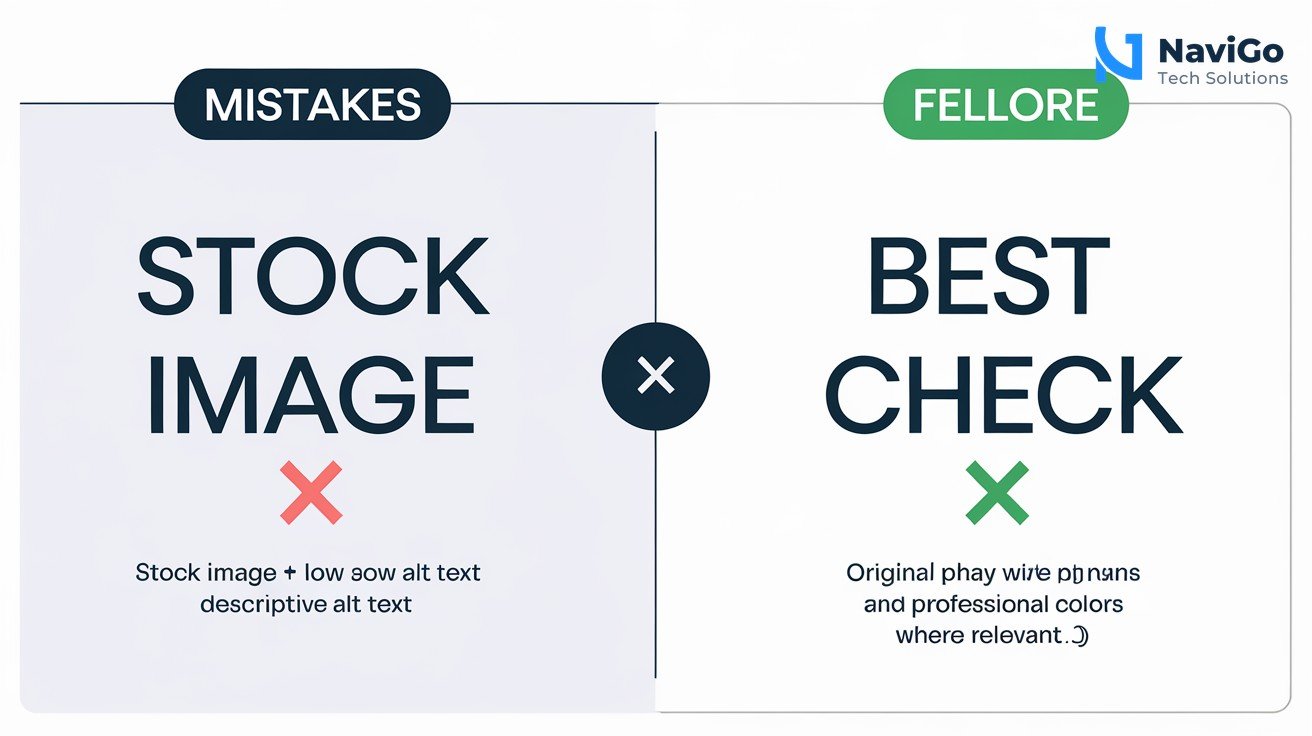
Mistake 1: Using Low-Quality or Stock Images
Stock images are generic and rarely match the specific products or services you offer. They also lack the contextual detail that visual search algorithms need to rank your content. Always use original images that represent your business accurately. A Chennai-based boutique should photograph its own items, not borrow stock photos of generic clothing.
Mistake 2: Ignoring Mobile Optimisation
Visual search is largely a mobile activity. If your website loads slowly on phones or your images take too long to display, users will leave. Compress images without losing quality. Use responsive design so images resize correctly on all devices. Google’s mobile-first indexing means mobile performance directly affects your rankings.
Mistake 3: Neglecting Image Captions and Surrounding Content
Google does not just look at the image file. It reads the entire page. Write clear captions under your images. Ensure surrounding paragraphs contain relevant keywords and information. Do not hide images behind JavaScript or lazy-loading that blocks search engines. Keep your pages simple and accessible.
Mistake 4: Forgetting Local Context in Visual Search
Indian businesses often miss the opportunity to include local landmarks, cultural elements or regional identifiers in their images. A photo of your Chennai store with the neighbourhood backdrop helps Google associate your business with that location. Include geotags in your image metadata and mention your location in captions. This is especially effective for restaurants, hotels and retail stores.
Visual Search Tools and Platforms Comparison
Several tools help businesses optimise for visual search and manage their image assets. Below is a comparison of the most relevant platforms for Indian small and medium businesses. Choose based on your budget, technical skills and specific needs.
| Tool | Best For | Key Feature | Cost for Indian SMEs |
|---|---|---|---|
| Google Lens | Direct product discovery | Searches by photo from camera or gallery | Free |
| Google Images (Web) | Indexing product catalogues | AI-powered discovery hub with filters | Free |
| Shopify (with SEO apps) | E-commerce visual search | Automatic alt text and schema generation | Rs. 2,000/month basic plan |
| Pinterest Visual Search | Inspiration and mood boards | Camera search within the app | Free for business accounts |
| Google Ads (Visual Ad Extensions) | Paid visual discovery | AI-generated image ads with Shopping integration | Pay-per-click, starting Rs. 50/day |
| Adobe Express (Image Optimisation) | Quick image editing and metadata | Free tools for resizing, compression and captions | Free basic version |
Visual search is not just a trend. It is the next logical step in how people find information and products. For Indian businesses, especially those in competitive markets like Chennai, adopting visual search optimisation now can give you a significant advantage over competitors who are still relying on text-only SEO. A professional SEO optimisation service can help you implement these changes correctly and monitor your visual search performance.
Not sure which tool fits your business?
Our team at NaviGo Tech Solutions will set it up for you — free 30-minute strategy call.