- How BMS achieved 55% cost savings using NVIDIA’s AI factory for drug development
- The specific AI models and infrastructure (DGX SuperPOD, Claude AI) used by BMS
- Practical steps Indian pharma companies can take to implement similar AI strategies
- Common mistakes to avoid when integrating AI into pharmaceutical R&D
What Is the NVIDIA-Bristol Myers AI Factory?
The partnership between NVIDIA and Bristol Myers Squibb is not a small pilot project. It is a full-scale AI factory built on NVIDIA DGX SuperPOD, a supercomputing platform designed for high-performance computing. This platform became operational in March 2024 and has since transformed how BMS approaches drug discovery and development.
BMS uses this AI factory to train foundational AI models on hundreds of thousands of clinical trial images. These models help predict patient outcomes, especially in immuno-oncology. The system also uses large language models (LLMs) and transformers to analyse diverse clinical trial data—genomics, lifestyle factors, and treatment history—to predict how patients will respond to treatments.
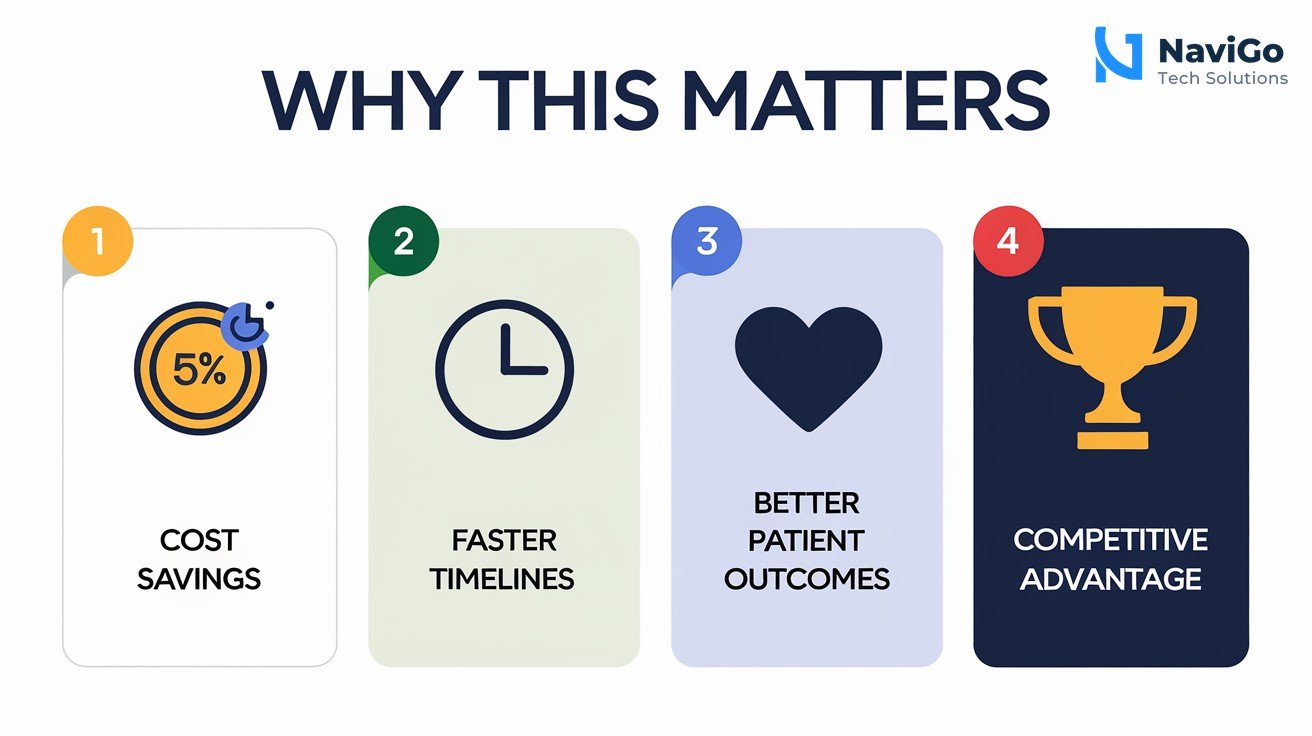
The results speak for themselves. BMS reported 55% overall cost savings compared to its previous computational model. The company also deployed Anthropic’s Claude AI model in May 2026 to speed up drug discovery and enterprise-wide workflows. Claude helps researchers process and summarise vast amounts of scientific literature, saving weeks of manual work.
For Indian pharma, these numbers are a wake-up call. If a global giant can cut costs by more than half using AI, Indian companies must seriously evaluate how they can achieve similar efficiency gains. For a practical guide on integrating AI into your overall marketing and business strategy, read our overview of AI Digital Marketing services.
Why This AI Factory Matters for Indian Pharma
India is the pharmacy of the world, but it needs to move up the value chain
India already has over 55 Global Capability Centres (GCCs) in pharma and employs more than 3 lakh people in the sector. However, most Indian companies still focus on generic manufacturing and contract research. The NVIDIA-BMS model shows that AI-driven drug discovery is the next frontier. Companies that do not invest in AI infrastructure will struggle to compete in high-value areas like oncology and neurodegeneration research.
Cost savings can be dramatic
BMS saved 55% on computational costs. For Indian pharma companies operating on thinner margins, these savings can free up capital for other critical investments. An AI factory can handle tasks like automated lesion segmentation, medical imaging analysis, and patient outcome prediction at a fraction of the cost of traditional methods.
Talent and infrastructure are ready, but action is needed
India produces world-class AI and data science talent. However, many pharma companies still rely on outdated IT systems. The good news is that NVIDIA’s DGX SuperPOD is now accessible as a service, meaning companies do not need to build their own hardware from scratch. Indian firms can partner with NVIDIA or other cloud providers to access similar computing power.
To get started with AI strategy in your organisation, consider exploring AI Strategy Consulting services that can help you map out a practical roadmap.
Indian companies that move now can leapfrog competitors. The window is narrow. Global pharma is already doubling down on AI. According to Reuters, the pharma sector is slashing costs and timelines with AI. Indian firms must follow suit or risk losing their position as the preferred partner for global drug development.
How Indian Pharma Can Build Their Own AI Factory: A Step-by-Step Guide
You do not need to replicate the entire NVIDIA DGX SuperPOD setup from day one. Here is a practical roadmap for Indian pharma companies of any size.
- Step 1: Audit your current computational infrastructure. List all existing hardware, software, and data storage capabilities. Identify bottlenecks in data processing, especially for medical imaging and genomics data. Many Indian companies have siloed data that first needs to be centralised.
- Step 2: Start with a focused AI pilot project. Choose one area where AI can deliver quick wins. For example, automate lesion segmentation in radiology images or use LLMs to summarise clinical trial literature. BMS started with a smaller NVIDIA cluster three years before scaling up.
- Step 3: Partner with AI platform providers. You do not need to build from scratch. NVIDIA offers DGX SuperPOD as a cloud service. Similarly, platforms like Anthropic’s Claude or OpenAI’s models can be accessed via API. Evaluate which provider aligns with your data privacy and compliance needs.
- Step 4: Train your teams on AI workflows. Invest in upskilling your R&D and data science teams. Running foundational models requires understanding of self-supervised learning, transformers, and medical imaging frameworks like NVIDIA MONAI. Consider hiring a dedicated AI lead for your pharma division.
- Step 5: Scale gradually. Once your pilot shows measurable results (like reduced time for image analysis or cost savings), expand to more use cases. BMS expanded from oncology imaging to neurodegeneration and genomics analysis. Set clear KPIs for each phase.
If you are also looking to market your pharma products more effectively, understanding PPC advertising in 2026 can help you reach doctors and hospitals with precision.
Common Mistakes Indian Pharma Makes When Adopting AI
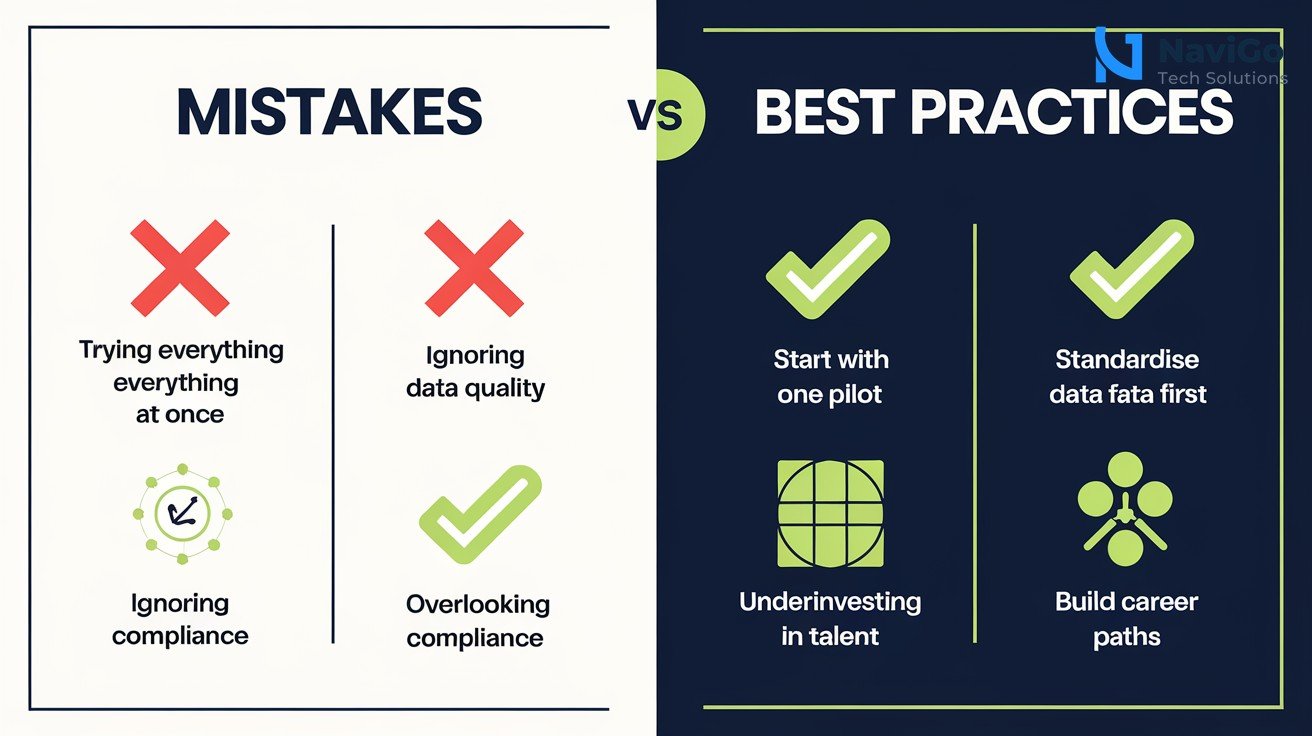
Mistake 1: Trying to do everything at once
Many Indian companies rush to deploy AI across all departments simultaneously. This leads to fragmented systems, poor data integration, and low adoption. Start small. Pick one high-impact use case, prove the value, then scale. BMS started with a smaller cluster and expanded organically.
Mistake 2: Ignoring data quality and standardisation
AI models are only as good as the data they train on. Indian hospitals and labs often have non-standardised data formats, missing fields, and low-resolution images. Before investing in AI infrastructure, clean and standardise your existing datasets. This is the most time-consuming but critical step.
Mistake 3: Overlooking regulatory compliance
The Indian pharmaceutical sector is heavily regulated. Using AI in drug discovery and clinical trials must comply with CDSCO and global regulatory standards. Ensure your AI models are explainable and auditable. Black-box models that cannot be validated will fail regulatory scrutiny.
Mistake 4: Underinvesting in talent retention
India produces excellent AI talent, but the demand is high. Many pharma companies lose their AI experts to tech giants and startups. Build a strong career path for your AI team. Offer competitive compensation, access to cutting-edge tools, and opportunities to publish research. This reduces attrition and builds institutional knowledge.
For a broader view of how AI is transforming business workflows, read our analysis of GPT-5.2 for business and how it can improve productivity in your operations.
AI Tools Comparison: What Works for Indian Pharma in 2026
There are several AI tools and platforms available for Indian pharma companies. Below is a comparison of the most relevant ones based on cost, ease of use, and applicability to drug discovery and development. Indian companies should evaluate these options based on their specific needs and budget.
For example, NVIDIA DGX SuperPOD is ideal for large-scale medical imaging, while Anthropic Claude is better for text-heavy tasks like literature review. Indian firms can also consider hybrid approaches that combine multiple tools.
| Tool / Platform | Best For | Cost (Approx.) | Ease of Implementation |
|---|---|---|---|
| NVIDIA DGX SuperPOD | Large-scale medical imaging, genomics | High (custom quote) | Medium (requires skilled team) |
| Anthropic Claude AI | Literature review, document analysis | Pay-per-use (API) | Easy (API integration) |
| NVIDIA MONAI | Medical image analysis, lesion segmentation | Free (open source) | Medium (needs ML expertise) |
| Google Cloud Healthcare API + Vertex AI | Data standardisation, predictive modelling | Pay-per-use | Medium (good documentation) |
| Amazon SageMaker + HealthLake | Custom model training, data lake management | Pay-per-use | Medium (requires AWS knowledge) |
| OpenAI GPT-5 series | Generative AI for report writing, summarisation | Pay-per-use (API) | Easy (simple API calls) |
For Indian companies on a tight budget, starting with NVIDIA MONAI (free) and adding cloud services like Google Vertex AI can provide a balanced approach. If you need help implementing these tools, our AI Agents & Bots team can assist with custom integrations and workflow automation.
Not sure which tool fits your business?
Our team at NaviGo Tech Solutions will set it up for you — free 30-minute strategy call.