- Sol is best for long-horizon agentic coding, Terra balances everyday work, Luna is cheap and fast for high-volume tasks
- GPT-5.6 on AWS Bedrock gives Indian firms direct access without OpenAI API keys
- Pricing is roughly half Claude Fable 5 — Luna at $1/M input tokens, Sol at $5/M input tokens
- Programmatic Tool Calling and Multi-agent beta open new automation possibilities for Indian SMEs
What Is OpenAI GPT-5.6 Sol Terra Luna
OpenAI publicly released the GPT-5.6 model family on July 9, 2026. The series ships in three named tiers: Sol (flagship model for complex agentic work), Terra (balanced everyday assistant), and Luna (lightweight, high-volume, low-latency model). This is a major shift from previous numbering — each tier now advances on its own schedule.
Sol is OpenAI’s strongest model yet, with improved performance across coding, biology, and cybersecurity. In the SWE-Bench Pro test, Sol scored 64.6% — a strong result for real-world software engineering tasks. Terra handles everyday business needs like content drafting, data analysis, and customer support. Luna is designed for tasks where speed and low cost matter more than deep reasoning, such as real-time chat summarization or form processing.
Alongside the models, OpenAI introduced Programmatic Tool Calling, which allows developers to orchestrate JavaScript-based tool chains directly in the Responses API. The Multi-agent beta lets multiple AI agents coordinate in parallel for complex business workflows. A new voice model called GPT-Live was also rolled out globally on July 8, 2026, enabling simultaneous listening and speaking.
For Indian businesses, this tiered approach means you no longer pay a premium for every task. A small e-commerce store in Chennai can use Luna for chatbot responses, Terra for product descriptions, and Sol for backend integration — all through a single provider at predictable costs.
Why AWS Bedrock Availability Matters for Indian SMEs
Amazon Bedrock is AWS’s managed service for foundation models. When GPT-5.6 became generally available on Bedrock on July 13, 2026, it opened a direct channel for Indian businesses already using AWS. You no longer need a separate OpenAI API key or deal with rate limits — you access Sol, Terra, and Luna through your existing AWS console.
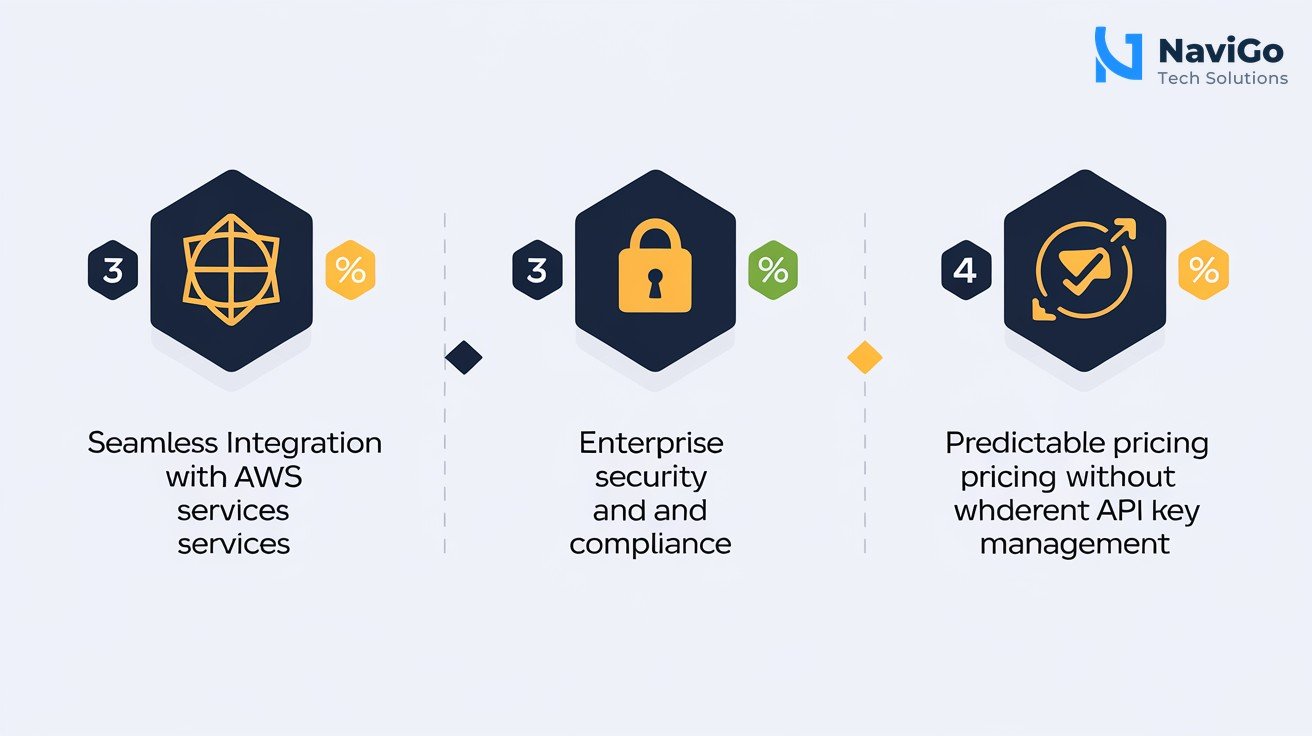
Seamless Integration with Existing AWS Services
For Indian SMEs running their infrastructure on AWS, Bedrock means GPT-5.6 integrates naturally with S3, Lambda, SageMaker, and other services. A logistics firm in Mumbai can trigger a Luna-powered invoice check using a Lambda event. A Chennai retailer can use Terra to generate product descriptions stored in S3. This reduces latency and keeps data within your AWS environment, which matters for compliance under Indian data laws.
Enterprise-Grade Security and Compliance
AWS Bedrock provides built-in security features like encryption, access controls, and audit logs. Indian businesses handling sensitive customer data — such as financial services or healthcare — can deploy GPT-5.6 models without worrying about data leaving India’s regulatory boundaries. You stay within the AWS ecosystem, which already meets most Indian compliance requirements.
Predictable Pricing Without API Key Management
Bedrock’s pay-as-you-go model means Indian SMEs can start small. There are no upfront commitments or minimum spends. You can test Luna for a month at just $1 per million input tokens, then scale to Sol for critical tasks. This flexibility is ideal for businesses that want to experiment before investing heavily.
For a deeper look at how GPT-5.6 compares with other AI tools, check out our GPT-5.6 automation guide for Indian SMEs.
How to Choose the Right GPT-5.6 Model for Your Business
Selecting between Sol, Terra, and Luna depends on three factors: task complexity, volume, and budget. Here is a practical decision framework for Indian SMEs.
- Step 1: Identify your task type. If you need complex coding, multi-step reasoning, or agentic workflows, choose Sol. For everyday tasks like drafting emails, summarising reports, or generating content, choose Terra. For simple, high-volume jobs like chat responses, form parsing, or sentiment analysis, choose Luna.
- Step 2: Estimate your monthly token usage. A small business handling 10,000 customer queries per month (each roughly 500 tokens) uses 5 million input tokens. At Luna pricing ($1/1M tokens), that costs $5 per month. The same volume with Terra costs $12.50. Choose Luna for high-volume repetitive tasks.
- Step 3: Consider latency requirements. Luna is optimised for speed. If your chatbot needs sub-second replies, Luna is the best option. Sol is slower but delivers deeper reasoning. Terra sits in the middle — fast enough for most business apps but not as quick as Luna.
- Step 4: Start with Terra, then specialise. Most Indian SMEs should begin with Terra for general tasks. Once you understand your usage patterns, you can route specific tasks to Sol or Luna. This keeps costs low while you learn.
For example, a dentist clinic in Bangalore using AI agents and bots could use Luna for appointment reminders, Terra for patient information summaries, and Sol for analysing patient feedback trends.
Common Mistakes to Avoid When Deploying GPT-5.6 on AWS Bedrock
Indian SMEs often make a few predictable errors when adopting new AI models. Avoiding these can save time and money.
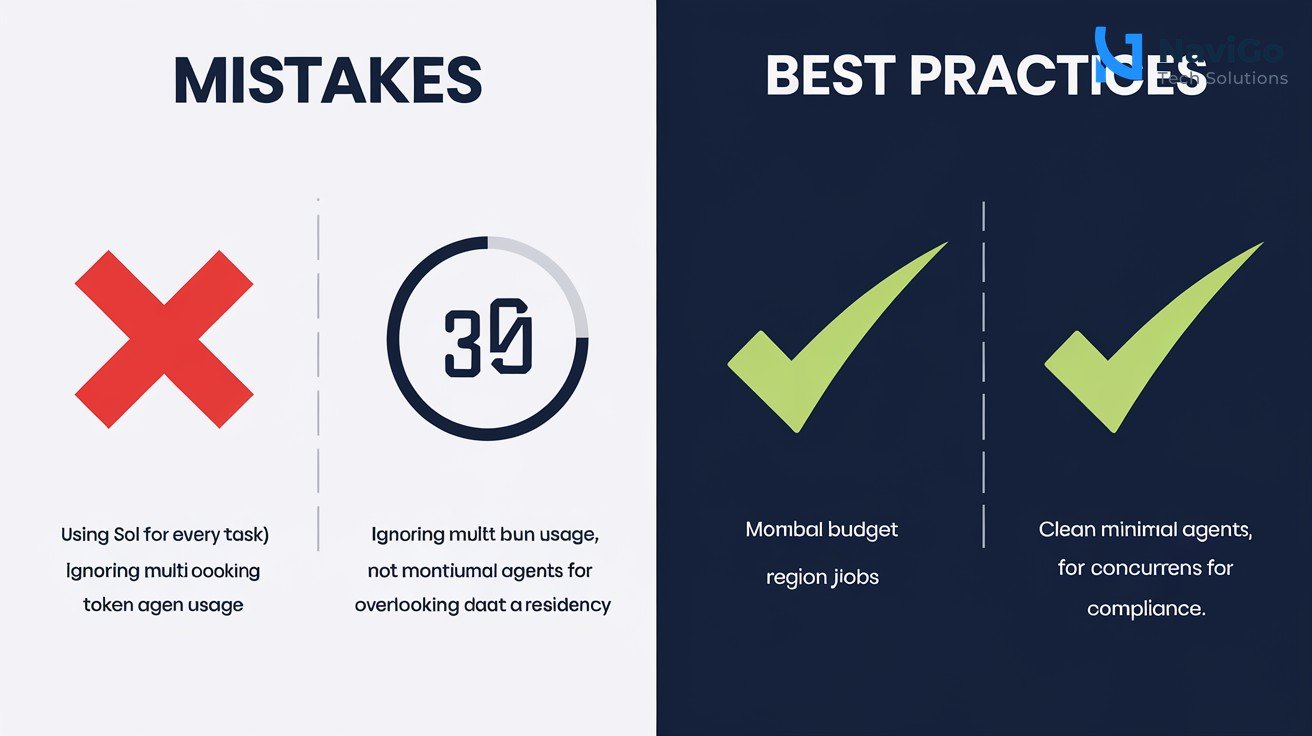
Mistake 1: Using Sol for Every Task
Sol costs $5 per million input tokens — five times more than Luna. Using Sol for simple chat responses or data entry tasks leads to unnecessary expense. Evaluate each task’s complexity before assigning a model. Many Indian businesses start with Sol out of excitement, only to see bills climb. Use our guide on how GPT-5.6 cuts Indian business costs by 75% to understand the economics.
Mistake 2: Ignoring the Multi-agent Beta
The Multi-agent beta in the Responses API allows parallel agent coordination. Many SMEs treat GPT-5.6 as a single assistant when they could run multiple agents in parallel — one for customer support, one for data analysis, one for content generation. This increases throughput without raising per-call costs.
Mistake 3: Not Monitoring Token Usage
AWS Bedrock provides usage dashboards, but many Indian businesses forget to set up alerts. Without monitoring, you risk surprise bills. Set a monthly budget alert for each model tier and review usage weekly during the first month.
Mistake 4: Overlooking Data Residency
Even though Bedrock keeps data in AWS, double-check the AWS region you choose. For Indian SMEs, using the Mumbai region ensures data stays within India. Using a US or EU region might accidentally expose data to different regulatory frameworks.
GPT-5.6 Pricing and Performance Comparison Table
Here is a clear breakdown of GPT-5.6 pricing and benchmarks compared with Claude Fable 5, the closest competitor. All figures are per 1 million tokens, input/output prices listed.
| Model | Input Cost per 1M Tokens | Output Cost per 1M Tokens | SWE-Bench Pro Score | Best For |
|---|---|---|---|---|
| GPT-5.6 Sol | $5 | $30 | 64.6% | Complex coding, agentic workflows, long-horizon tasks |
| GPT-5.6 Terra | $2.50 | $15 | Not benchmarked separately | Everyday business tasks, content, analysis |
| GPT-5.6 Luna | $1 | $6 | Not benchmarked separately | High-volume, low-latency tasks like chat |
| Claude Fable 5 | $10 | $60 | 80% | Advanced reasoning, but at double the cost |
| GPT-5.6 Sol (max reasoning) | $5 | $30 | 80 (Coding Agent Index) | Top-tier agentic performance, equivalent to Fable 5 on coding |
As the table shows, GPT-5.6 Sol at max reasoning matches Claude Fable 5’s coding agent performance for roughly half the cost. For most Indian SMEs, Terra offers the best value balance for daily operations. Start with Terra, then add Sol for specialised tasks. For more on integrating AI with your stack, read our AWS SageMaker AI inference guide for Indian firms.
Not sure which tool fits your business?
Our team at NaviGo Tech Solutions will set it up for you — free 30-minute strategy call.